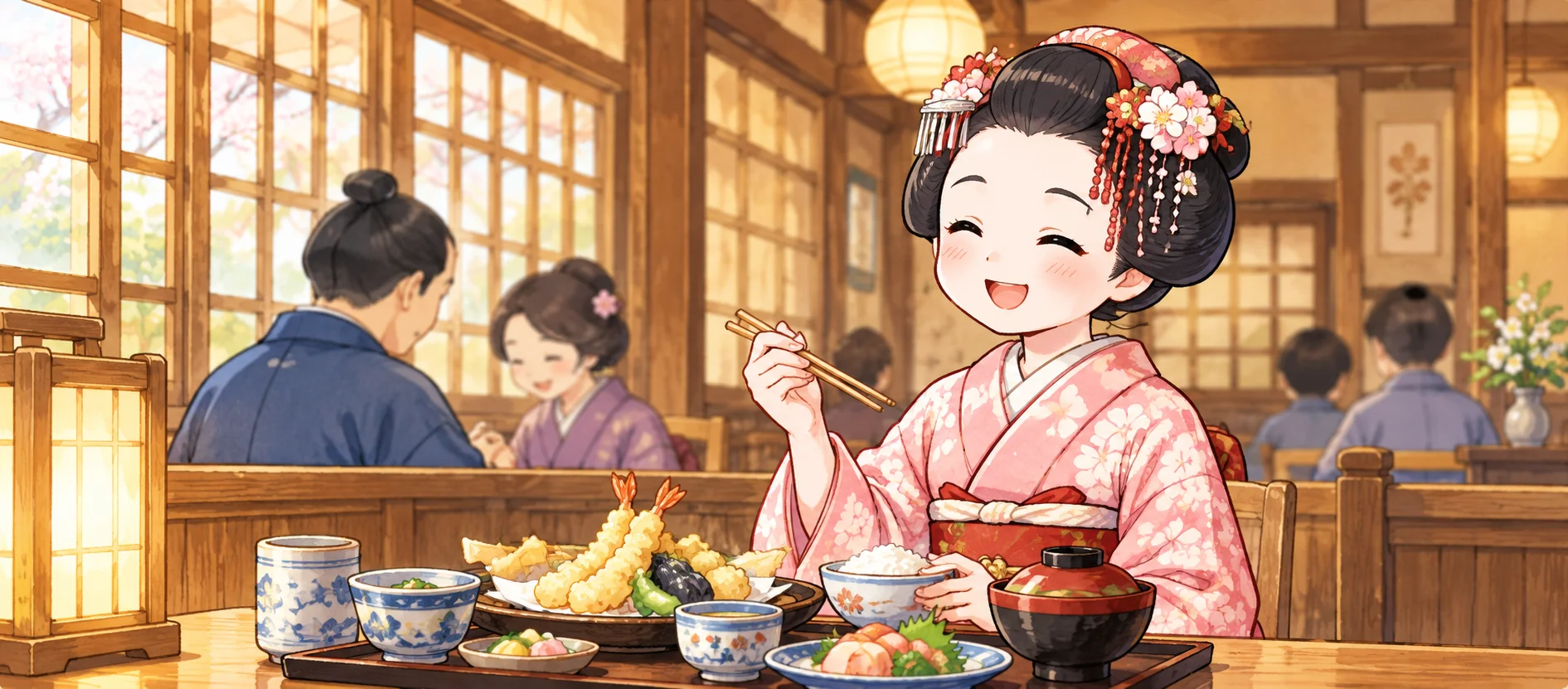





A maiko enjoying a Japanese meal

Enjoy dining in Japan

Restaurant manners

From your first order to the bill,
a few simple tips make dining easier.

✿ What you will learn ✿

Feel more confident at restaurants in Japan.
Learn how to enter, order, enjoy your meal,
use chopsticks, pay, and thank the staff.

✿ Key points ✿

Japanese food

✿ Contents ✿

  1. 1. Entering & seating 〉
  2. 2. Ordering your meal 〉
  3. 3. During your meal 〉
  4. 4. Using chopsticks 〉
  5. 5. Paying the bill 〉
  6. 6. Tipping & thanks 〉

✿ Frequently asked questions ✿

Q Do I need to leave a tip? +

Usually no. Restaurant tipping is not customary in Japan.

Q What should I do at a meal-ticket machine? +

Buy the ticket first, then follow the staff’s guidance. Ask for help if needed.

Q Why was I served an appetizer I did not order? +

Some izakaya serve a charged appetizer called otoshi. Ask about charges before ordering.

1Entering & seating

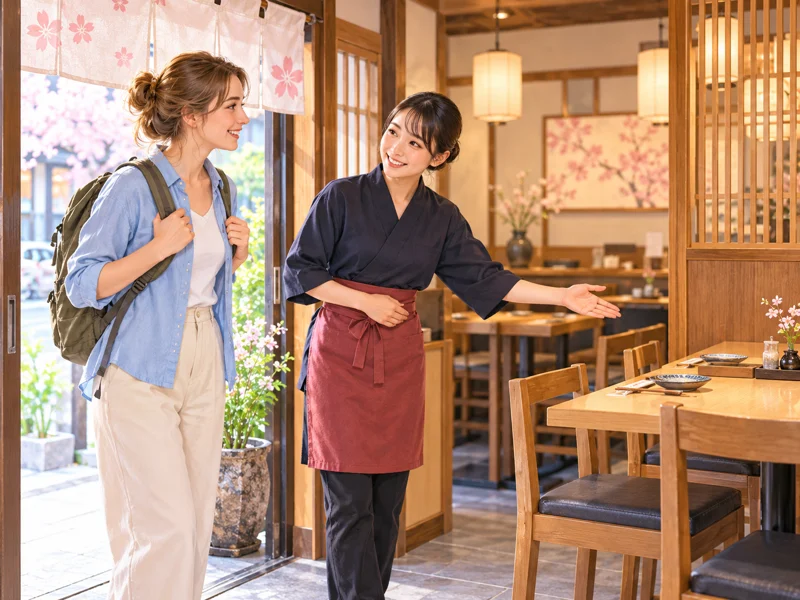
A host welcomes a diner

At a staffed restaurant, start by telling the host your group size and waiting for seating guidance. Some casual places let you choose a seat or order at a counter first. Check any waiting list, ticket machine or entrance sign.

An empty table may be reserved or still need clearing. Checking the entrance guidance helps staff manage seating; if it says to seat yourself, there is no need to wait for a host.

Remember this!
  • Follow restaurant seating guidance.
  • Remove shoes where indicated for tatami seating.
2Ordering your meal

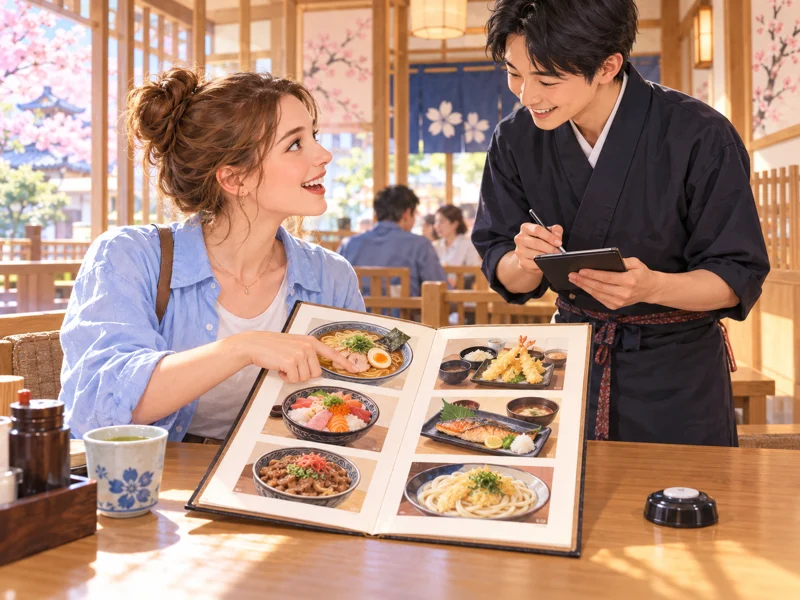
Ordering from a menu

Orders may go through staff, a tablet or a meal-ticket machine. Use a call button if provided, or a brief “sumimasen” when staff can respond. Explain dietary needs before ordering, and before buying a ticket if you need the kitchen to check ingredients.

Calling staff to order is normal; you do not have to wait for them to notice you. A short request or pointing at the menu can help. Menu changes and allergy arrangements are not possible at every restaurant.

Remember this!
  • Check how the restaurant takes orders.
  • Buy a meal ticket before eating when the restaurant directs you to do so.

3During your meal

Considerate diners

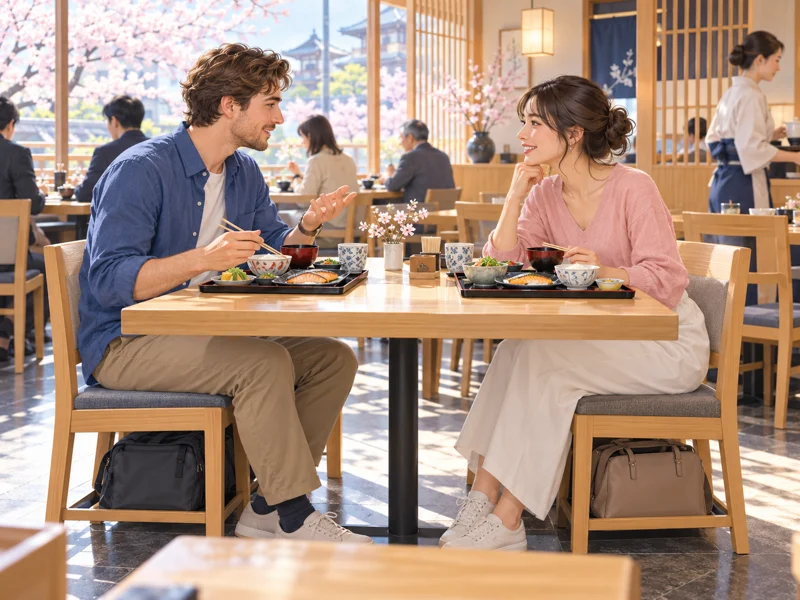
Conversation is part of dining. Match your volume to the setting: a lively izakaya and a quiet small restaurant have different atmospheres. Keep bags out of aisles, use the wet towel for your hands, and check the restaurant’s photo rules.

The aim is to let nearby diners talk and staff move safely, rather than to eat in silence. Use serving utensils for shared dishes when provided; if you need a separate plate or somewhere for a bag, ask.

Remember this!
  • Adjust your volume to the setting and keep aisles clear.
  • Use serving utensils when provided.

4Using chopsticks

Chopsticks on a rest

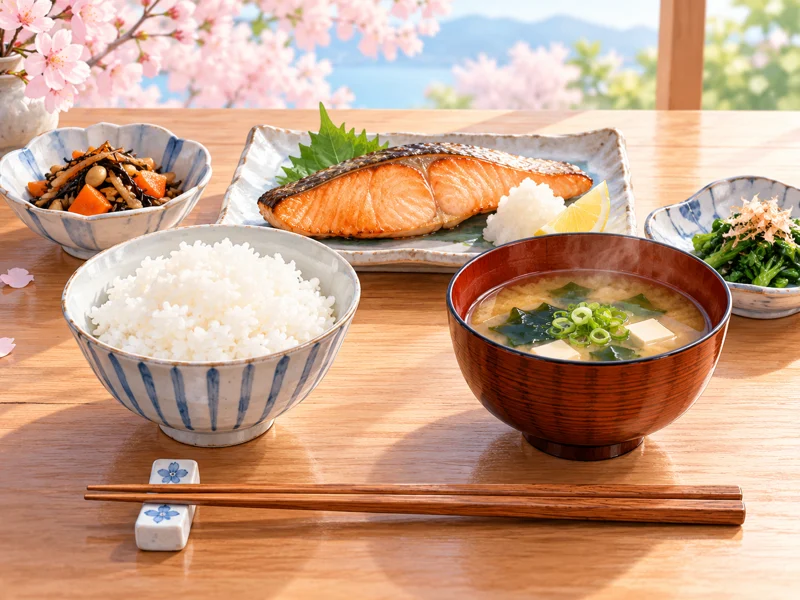
Avoid standing chopsticks upright in rice or passing food directly between two pairs, as these gestures recall funeral customs. To share food, place it on a plate. When pausing, use a chopstick rest or lay them together on a small plate if no rest is available.

These are familiar dining customs, not a test of skill. If you make a small mistake, simply adjust and carry on. Asking for a fork is fine, though some places, including ramen shops, may not have one.

Remember this!
  • Set chopsticks down together when you pause.
  • Ask whether a fork is available if chopsticks are difficult.

5Paying the bill

Paying at the cashier

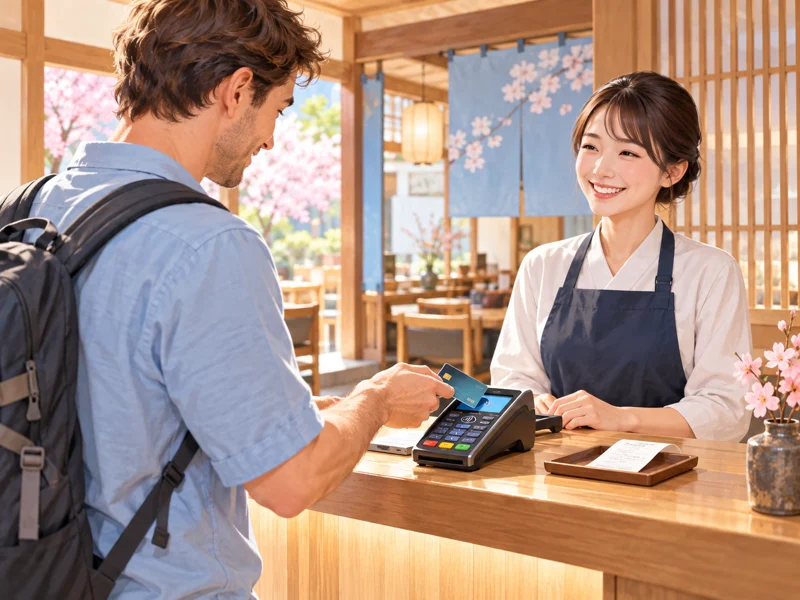
Many restaurants take payment at the cashier, while others offer table payment or require payment before eating. Follow their guidance. If you rely on a particular card or cashless method, check before ordering; separate bills may not be available.

Payment systems differ between restaurants. Asking early about separate bills helps avoid a delay at checkout; if the restaurant cannot split the bill, one person can pay and the group can settle up separately.

Remember this!
  • Check payment methods before ordering.
  • Ask in advance if you need separate bills.

6Tipping & thanks

Thanking the restaurant staff

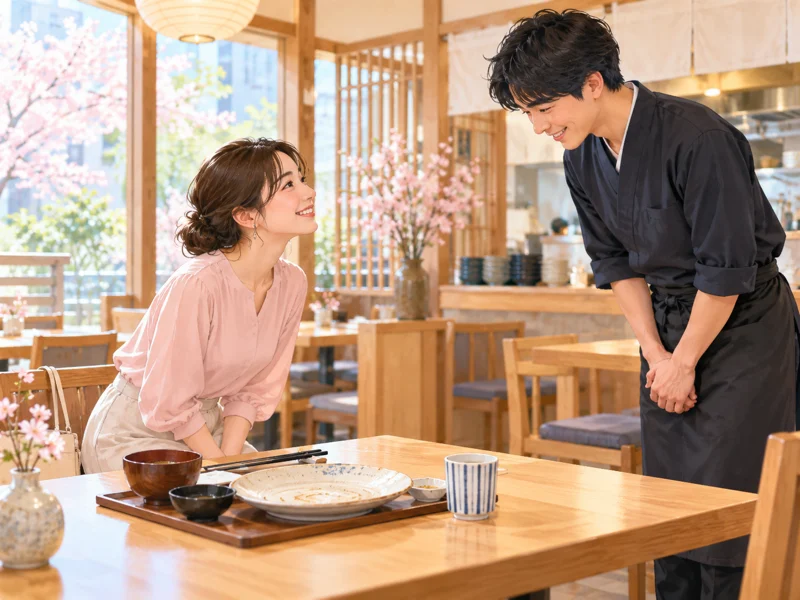
Tips are generally not expected at Japanese restaurants. Pay the bill and thank the staff. An otoshi appetizer or service charge is separate from a tip.

A simple thank-you is enough; you do not need a special phrase or extra money to show appreciation. If an otoshi or service charge is unclear, ask before ordering. Whether an otoshi can be declined depends on the restaurant.

Remember this!
  • Express thanks with a few polite words.
  • Try gochisosama deshita after your meal.

✿ Summary ✿

Follow the restaurant’s guidance, enjoy your meal, and be considerate of other diners. Ask when you are unsure. A smile and a thank-you can make your visit more enjoyable.

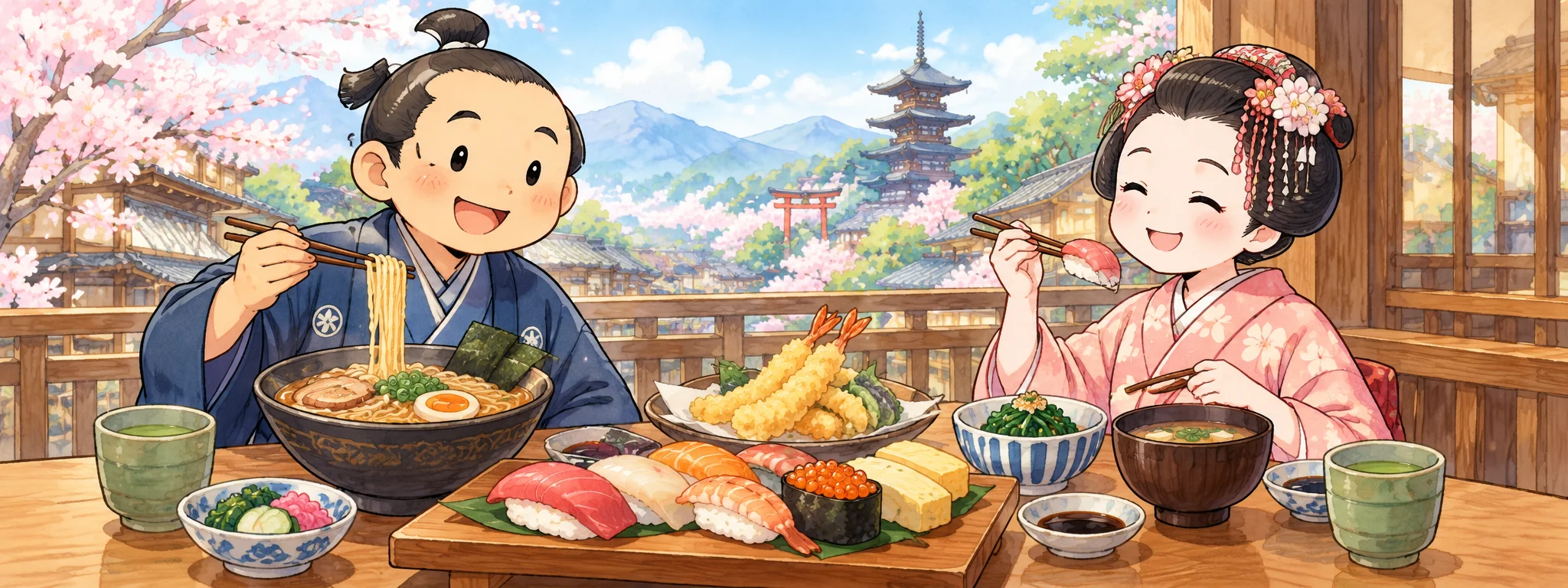
Enjoying a meal in Japan