
My Page

Enjoy monjayaki in Tsukishima — an illustrative dining scene

Regional food & local experiences

Enjoy monjayaki in Tsukishima

Gather around the griddle and taste slowly.
Discover monjayaki in Tokyo’s Tsukishima.

✿ What you will learn ✿

It looks and eats differently from okonomiyaki.
Learn how to order, cook and recognise when it is ready,
so your first visit feels easier.

Enjoy monjayaki in Tsukishima — an illustrative dining scene

✿ Frequently asked questions ✿

Q Is it a problem if I cannot cook it? +

Ask staff at the start. The local association highlights cooking help for first-timers; confirm what the particular restaurant can provide.

Q Can I eat it while it is still soft? +

Monjayaki stays soft, but that is separate from being adequately cooked. Ask staff when it is ready to eat.

Q Do I have to use the small spatula? +

It is a common method, but ask for a plate or chopsticks if easier. Avoid hot metal against your mouth and use a comfortable approach.

1What is monjayaki?

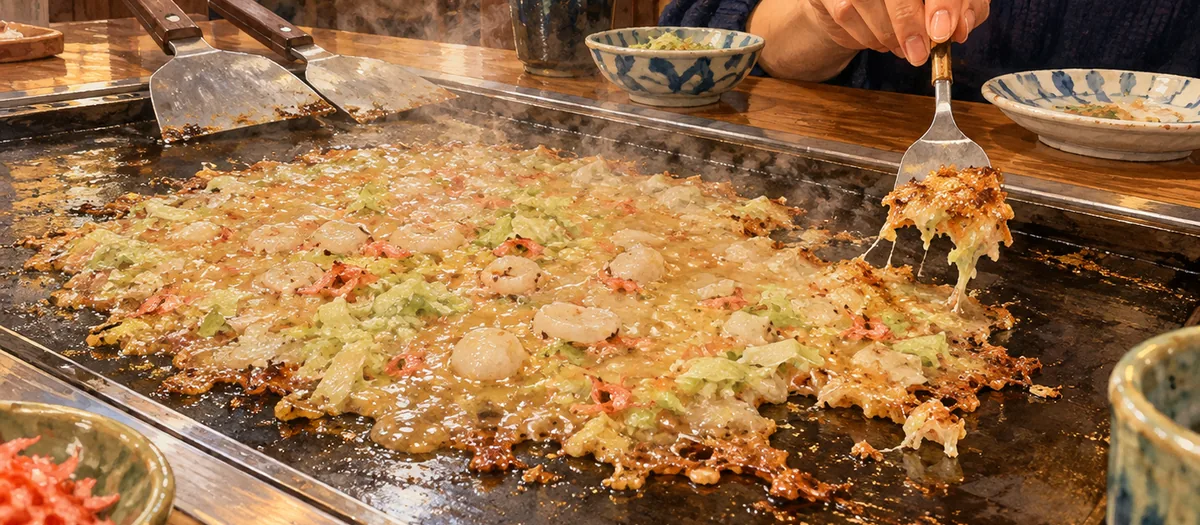
Soft cooked monjayaki with finely chopped cabbage spread thinly over a griddle.

Monjayaki cooks a loose mixture of flour, stock, cabbage and other fillings on an iron griddle. Associated with places such as Tokyo’s Tsukishima, it is enjoyed a little at a time, including its thin browned edges. It does not form a thick pancake like okonomiyaki.

Its soft appearance is part of the dish, but that does not tell you whether it has been cooked enough. Check with staff before starting to eat.

Remember this!
  • Enjoy small bites from the spread on the griddle.
  • Soft texture and safe cooking are separate checks.
See the steps and checks
  1. Ask which filling is the house classic if it is your first visit.
  2. Confirm the item name in shops also serving okonomiyaki or other griddle dishes.

Official guidance checked 2 October 2026
See the everyday Japanese food guide

2Choose fillings and quantity

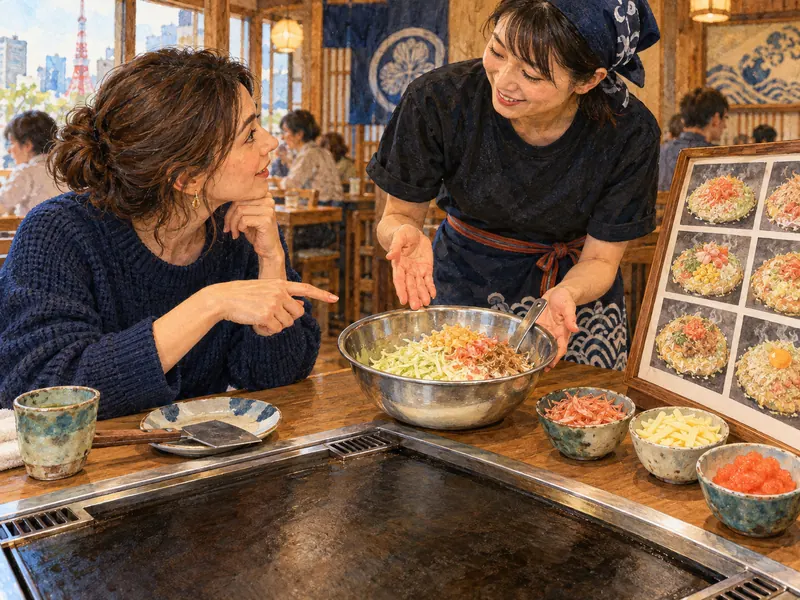
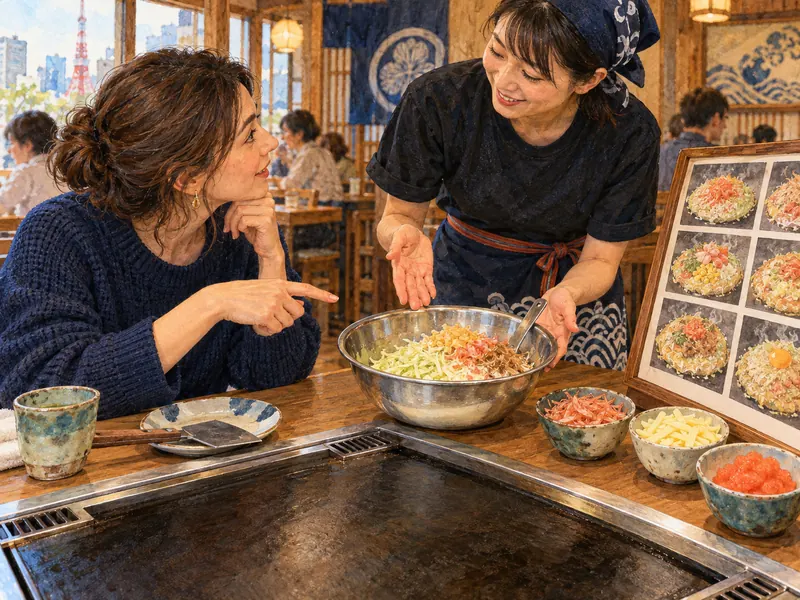
A visitor checks monjayaki fillings with a server beside the mixing bowl.

Shops offer combinations such as mentaiko, mochi and cheese, seafood or curry seasoning. Check one dish’s contents and price, then discuss the quantity for your party. Extra toppings can change both the price and allergens.

A restaurant may cook dishes one at a time rather than filling the griddle at once. Ask about portions and timing before adding more to your order.

Remember this!
  • Check the combination and price of each dish.
  • Mention unwanted fillings before mixing.
See the steps and checks
  1. Ask what is included in the selected monjayaki.
  2. For mentaiko or cheese options, check spice and dairy too.

Official guidance checked 2 October 2026
See the everyday Japanese food guide

3Use the little spatula comfortably

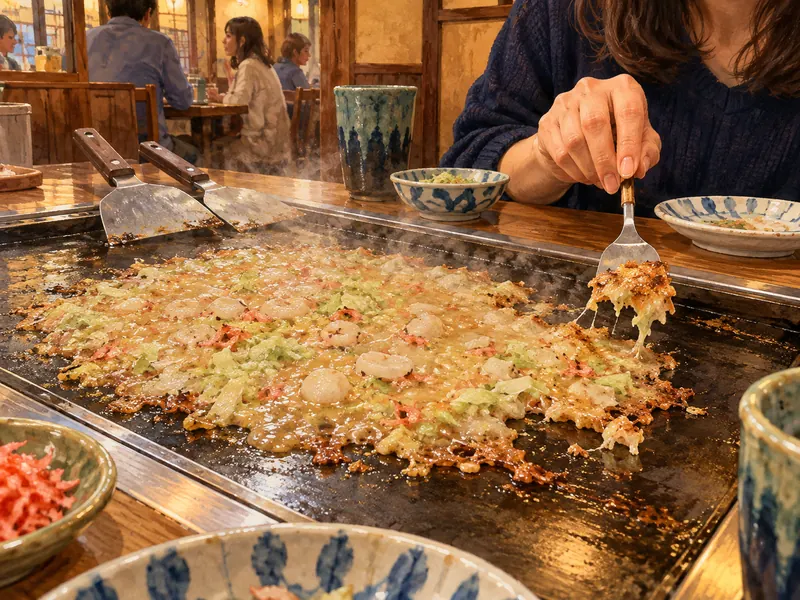
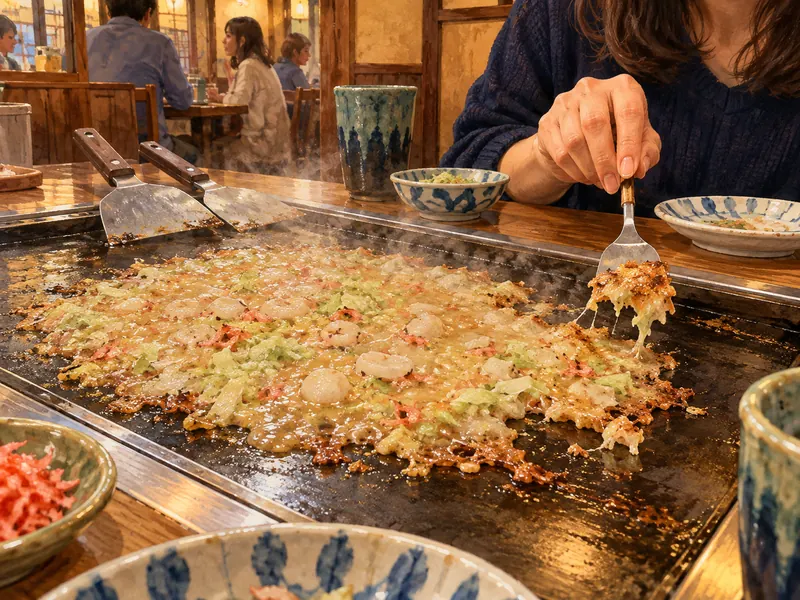
A small spatula lifts a cooked edge of monjayaki beside a plate for cooling.

A small spatula, often called a hagashi, can lift little portions from the cooked mixture. The browned edges are part of the appeal. Both griddle and metal utensil become hot, so take your time and ask for a small plate or other utensils if helpful.

There is no need to endure food that is too hot. Let a manageable portion cool enough to enjoy its texture and flavour.

Remember this!
  • Take a small portion and check its heat.
  • Do not put a hot metal spatula straight into your mouth.
See the steps and checks
  1. Distinguish the small eating spatula from the larger cooking ones.
  2. Use the restaurant’s utensils and guidance for the shared dish.

Official guidance checked 2 October 2026
See the everyday Japanese food guide

4Learn the method at a Tsukishima table

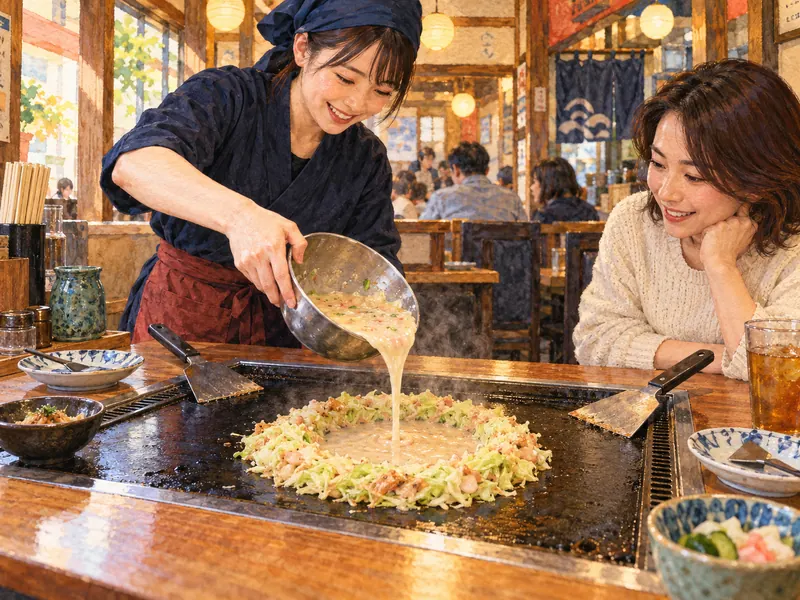
A server pours thin monjayaki batter into the centre of a cabbage ring.

A common method is to fry the fillings, shape them into a ring, pour batter into the centre, then combine and spread it. The Tsukishima association reassures first-time visitors that staff can cook for them. Confirm the help available and how much you can do yourself at your chosen shop.

This is a restaurant dining experience, not a scheduled cooking class. Say at the start if you would like to watch and learn the method.

Remember this!
  • Ask to learn the method with your first dish.
  • Listen to staff before handling the griddle.
See the steps and checks

An experience to try there

Official information checked 2 October 2026. Live availability has not been checked. Reconfirm prices, operation and conditions before booking. Images are illustrative and do not depict the exact venues.

Monkichi: monjayaki at the table

A restaurant whose official site offers cooking help for first-time diners; not a separate cooking class.

Location
3-8-10 Tsukishima, Chuo-ku, Tokyo; about five minutes from exit 7 of Tsukishima Station.
Booking
At the time checked, weekday reservations were for four or more, with weekends and holidays first-come. Recheck the current policy.
Duration
No fixed meal duration is published; ask about seating limits.
Language
Foreign-language service is unconfirmed; the local association provides an English map.
Children
Ask ahead about children’s seating, utensils and any age conditions.
  1. Ask staff to explain the filling and batter stages.
  2. Do not turn up the heat on your own; ask if it is burning or you are unsure about the texture.

Official guidance checked 2 October 2026
Compare the regions and plan your trip

5Hot griddles and less-visible ingredients

A diner asks about the monjayaki batter and toppings before preparation.

Avoid touching the griddle or hot cooking spatulas, and keep sleeves and children’s hands clear. Flour, stock and tempura crumbs may contain wheat or seafood, while fillings can include shrimp, squid, cheese or mochi. Check beyond the visible toppings.

Because food shares the griddle, removing an ingredient may not be enough for an allergy. Mochi fillings also become sticky and stretchy, so consider whether the texture is manageable.

Remember this!
  • Check ingredients and shared-griddle handling.
  • Ask staff if you are unsure whether it is ready.
See the steps and checks
  1. Explain allergies clearly on arrival and before ordering.
  2. Choose another dish or venue if the required accommodation cannot be confirmed.

Official guidance checked 2 October 2026
See the everyday Japanese food guide

6Explore toppings and house styles

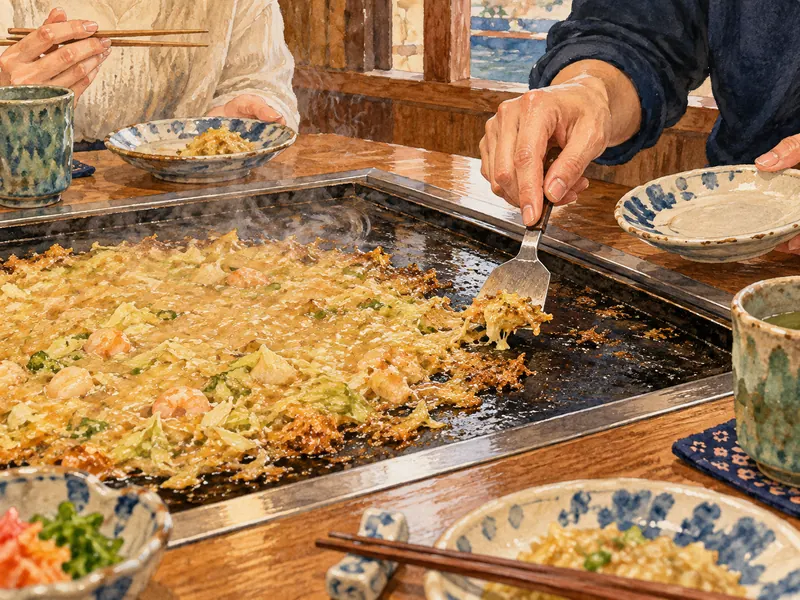
Monjayaki spread thinly on the griddle with golden cooked edges.

Dashi, spicy mentaiko and rich cheese create different experiences. Cooking methods are adjusted for the shop and fillings, so the ring method is not a rule for every item. Ask about the house recommendation and follow the approach for that particular dish.

Allow time to cook dishes in sequence on a shared griddle. When exploring Tsukishima, keep nearby residents and other shop entrances in mind.

Remember this!
  • Ask for the house recommendation and try manageable amounts.
  • Follow the shop’s directions when waiting in a lane.
See the steps and checks
  1. Check busy periods, closing days and reservation rules before visiting.
  2. Before adding another flavour, discuss how much everyone still wants to eat.

Official guidance checked 2 October 2026

See the everyday Japanese food guide

✿ Summary ✿

Choose the fillings and ask for help at the start. Understanding a typical method, frying fillings, forming a ring and adding batter, makes the demonstration easier to follow. Ask when it is ready, let each bite cool and check ingredients and shared equipment when necessary.

Enjoy monjayaki in Tsukishima — an illustrative dining scene