
My Page

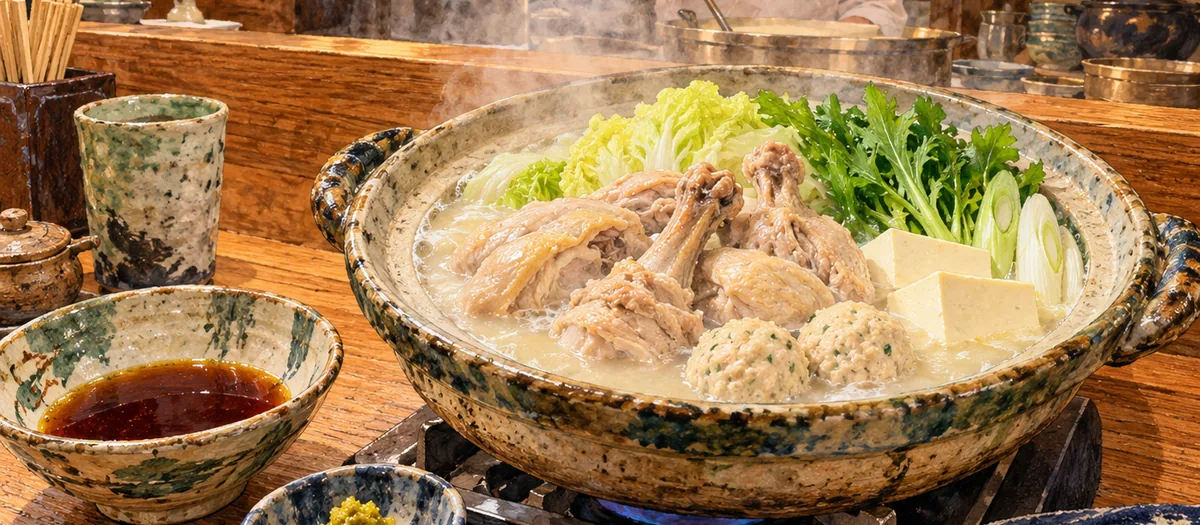
Enjoy Hakata mizutaki — an illustrative dining scene

Regional food & local experiences

Enjoy Hakata mizutaki

From the first sip to the final porridge.
Take time with Hakata’s chicken hot pot.

✿ What you will learn ✿

The broth is part of the pleasure.
Learn how to order, share and finish
a Hakata chicken hot-pot meal.

Enjoy Hakata mizutaki — an illustrative dining scene

✿ Frequently asked questions ✿

Q Do I have to cook the hot pot myself? +

Cooking and serving routines vary. Tell staff it is your first time and ask about heat and when ingredients are ready.

Q Can I order mizutaki alone? +

Minimum orders depend on the venue and course. A per-person price does not guarantee a single portion; ask about solo dining first.

Q Does white broth contain milk? +

Cloudiness can come from the chicken broth, so colour alone is not enough to judge ingredients. For a milk allergy, check the broth and meatballs directly with staff.

1Meet Hakata’s chicken hot pot
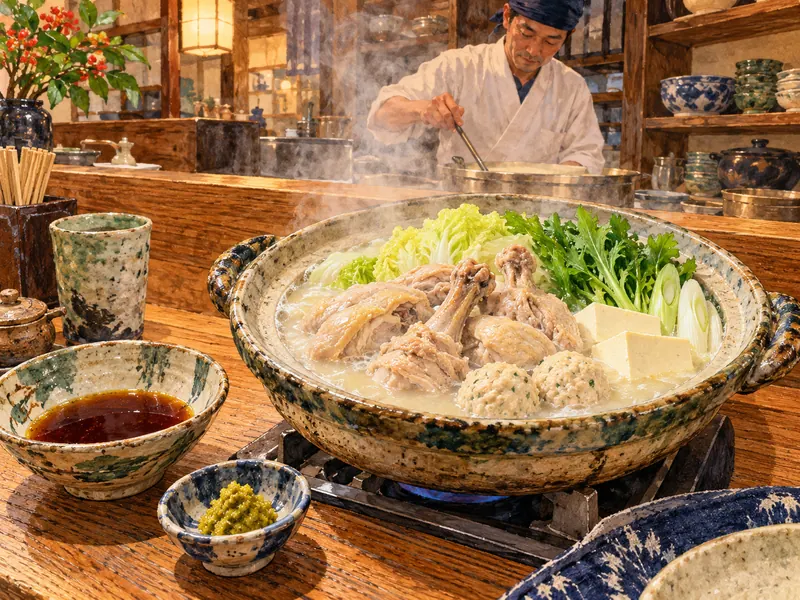
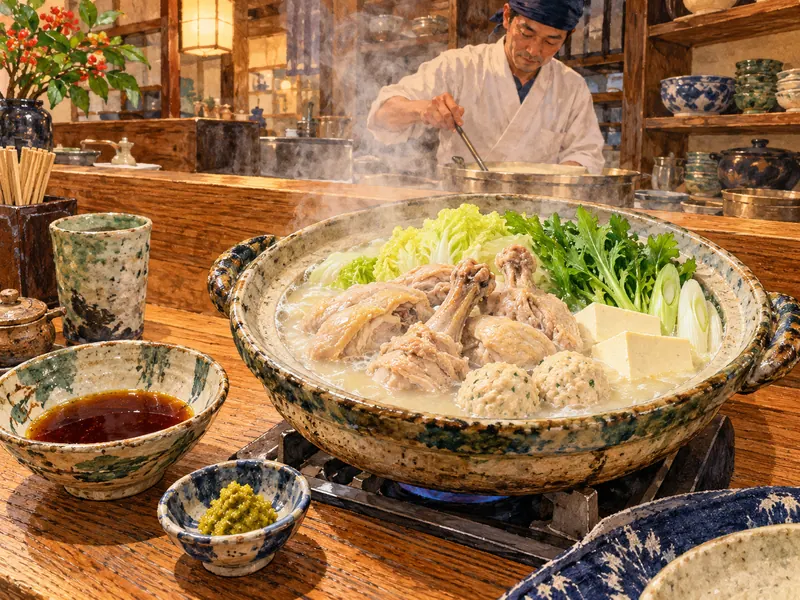
Mizutaki with chicken, meatballs, cabbage and tofu, with ponzu alongside.

Hakata mizutaki is a regional hot pot of chicken and vegetables in chicken broth. It may include bone-in pieces, meatballs and cabbage, with ponzu for dipping individual portions. Despite the word mizu, or water, the broth is an important part of the flavour.

Broths may be clear or cloudy. A white broth does not by itself tell you whether dairy is present; check ingredients separately if needed.

Remember this!
  • Enjoy the combination of broth, chicken and vegetables.
  • Ingredients and broth differ between restaurants.
See the steps and checks
  1. Mizutaki may be written 水炊き or 水たき.
  2. If bones are difficult, ask about boneless pieces and meatballs.

Official guidance checked 2 October 2026
See the everyday Japanese food guide

2Check the portions and course

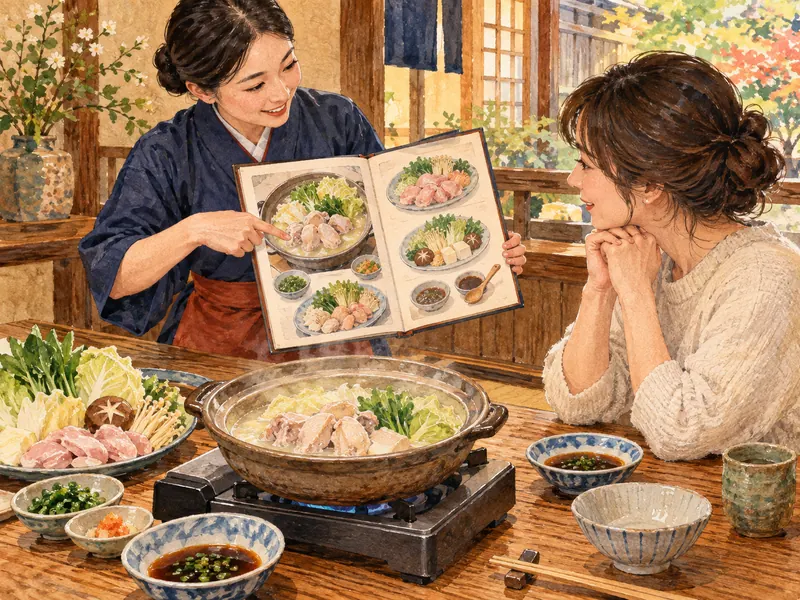
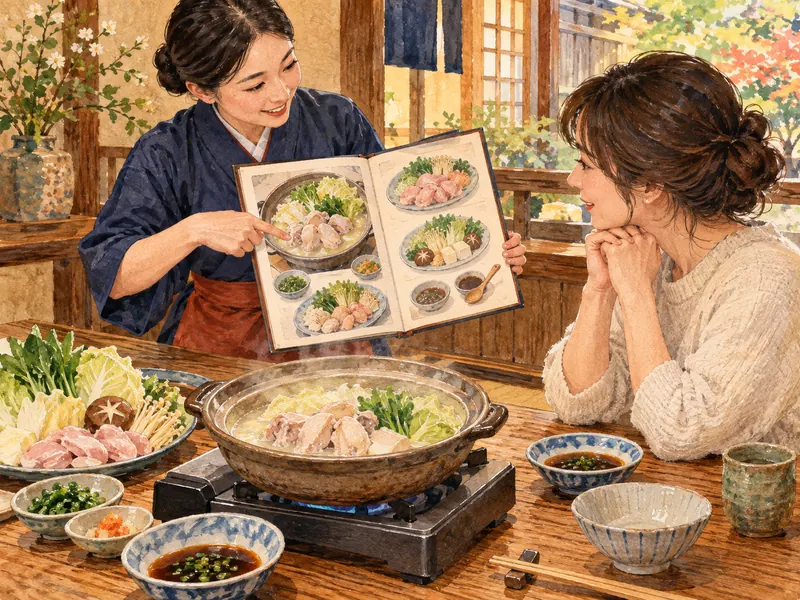
A diner checks a mizutaki course with the server using a picture menu.

A price per person does not always mean you can order a single portion. Check minimum orders, children’s portions, à la carte versus a course, and whether the final rice or noodles are included. A shared pot and one serving are not necessarily the same quantity.

Some extras can be chosen later, so you need not decide everything at the start. Discuss course changes and allergies ahead of time so the restaurant can plan.

Remember this!
  • Ask about minimum portions and what the finish includes.
  • Check drinks and any seating time limit too.
See the steps and checks
  1. Prepare to tell the restaurant your party size, children’s ages and dietary requirements.
  2. Contact the restaurant if delayed; Hanamidori Kawabata-dori lists automatic cancellation after 15 minutes without contact.

Official guidance checked 2 October 2026
See the everyday Japanese food guide

3From broth to the finish

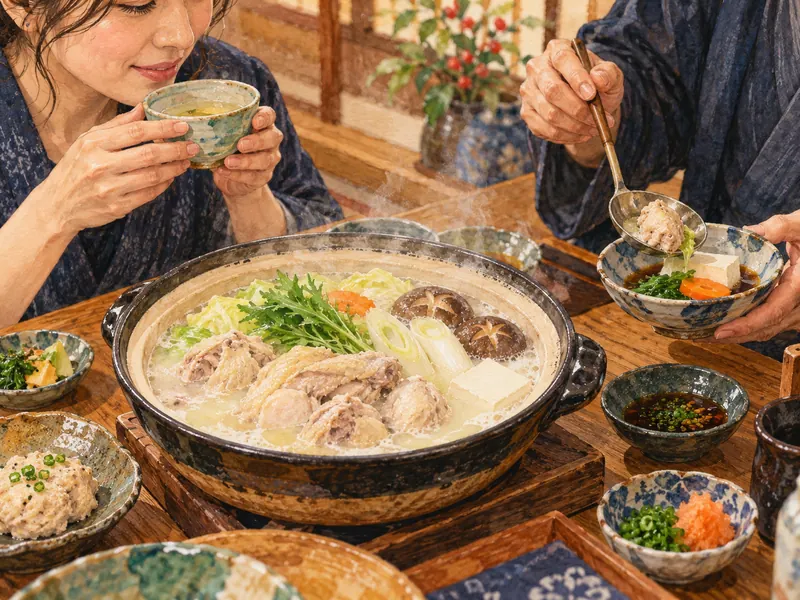
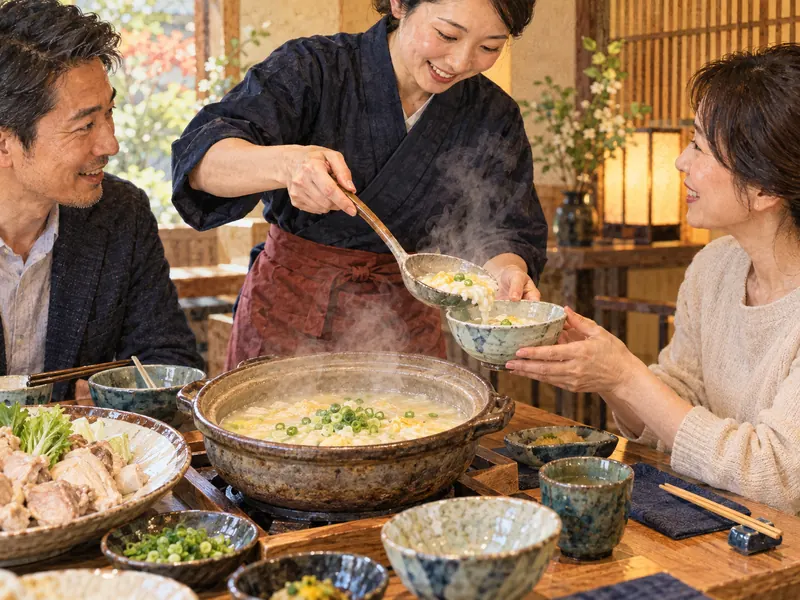
Diners taste broth from a small cup and transfer cooked food to separate dipping bowls.

Some restaurants start with broth in a small cup, then chicken, vegetables and finally rice porridge or noodles. Dip your own portion in ponzu and add a little yuzu kosho if offered. Follow the restaurant’s cooking method and ask when each ingredient is ready.

Check before adding your own dipping sauce or condiments to the shared pot. Seasoning in your personal bowl lets everyone choose their flavour.

Remember this!
  • Adjust the flavour gradually in your own bowl.
  • Ask staff about the burner setting.
See the steps and checks
  1. Keep serving utensils separate from your eating chopsticks.
  2. Before the final rice or noodles, ask staff how much broth and food should remain.

Official guidance checked 2 October 2026
See the everyday Japanese food guide

4Experience the meal at the table

A server portions the rice porridge that finishes a mizutaki meal.

Part of the pleasure is noticing how the broth changes during the meal: taste it early, then after vegetables, and finally in the rice porridge. The venue below offers a restaurant meal, rather than a participatory cooking class.

How much staff cook and serve varies by venue and service. At the start, say that it is your first visit and ask them to explain the routine.

Remember this!
  • Notice the broth at the beginning and end.
  • A restaurant meal is different from a cooking class.
See the steps and checks

An experience to try there

Official information checked 2 October 2026. Live availability has not been checked. Reconfirm prices, operation and conditions before booking. Images are illustrative and do not depict the exact venues.

Mizutaki dining at Hanamidori Kawabata-dori

A restaurant serving mizutaki courses; no cooking-class programme has been confirmed.

Location
4-210 Kamikawabata-machi, Hakata-ku, Fukuoka; a two-minute walk from Kushida Shrine Station.
Booking
Book through the official page or by phone; check your course and party requirements.
Duration
No fixed meal duration confirmed; ask about course length and seating limits.
Language
The site offers language options; confirm the language of in-person service.
Children
Families are welcomed; ask about chairs, meals and seating safely away from the heat.
  1. Photograph food when it is safe; do not lean over the hot pot.
  2. Check the meal length with the restaurant and leave time for onward travel.

Official guidance checked 2 October 2026
Compare the regions and plan your trip

5Take care with heat and chicken

A diner asks the server about hot-pot ingredients and preparation.

The pot, steam, handles and tabletop burner can be hot. Eat chicken and meatballs only after they are thoroughly cooked, and keep utensils that handled raw meat separate from eating utensils. If you are unsure whether food is ready, ask staff.

Check meatball binders, broth and ponzu as well as visible ingredients. Everything in a shared pot mixes, so removing an ingredient afterwards may not meet an allergy requirement.

Remember this!
  • Keep raw-meat and eating utensils separate.
  • Keep children’s hands away from hot surfaces.
See the steps and checks
  1. For self-cooking, the general heating benchmark is 75°C at the centre for at least one minute; follow staff cooking guidance in the restaurant.
  2. Choose another meal or restaurant if necessary allergy accommodation cannot be confirmed.

Official guidance checked 2 October 2026
See the everyday Japanese food guide

6Broth, ingredients and finishes

A chicken and vegetable mizutaki meal with ponzu and condiments.

Restaurants differ: cloudy or clear broth, bone-in chicken, meatballs and other combinations. The finish may be rice porridge, udon or champon noodles. There is no single version that every restaurant must follow.

Mizutaki and motsunabe are distinct Fukuoka dishes: the former typically centres on chicken, the latter on offal. Use the menu’s pictures and description to check which hot pot you want.

Remember this!
  • Explore a restaurant’s broth and final course.
  • Check ingredients and quantity even when the name is familiar.
See the steps and checks
  1. For a small party, compare à la carte and course portions.
  2. If buying a take-home set, check its own refrigerated or frozen storage requirements.

Official guidance checked 2 October 2026

See the everyday Japanese food guide

✿ Summary ✿

Check the party size, course contents and final rice or noodles. Follow staff guidance as you enjoy broth, chicken and vegetables. Ask about the pot and meat rather than guessing, and check meatballs and sauces for dietary needs. Clear and cloudy broths both have their own character.

Enjoy Hakata mizutaki — an illustrative dining scene