

My Page

Japanese drinks: a first guide — an illustrative dining scene

A practical food & restaurant guide

Japanese drinks: a first guide

Sake, shochu, or a cup of tea.
Choose a drink that suits your meal.

✿ What you will learn ✿

Understand the drinks and what to check when ordering.
Explore temperature, portions and food pairings,
plus alcohol-free choices and a safe journey home.

✿ Key points ✿

Japanese drinks: a first guide — an illustrative dining scene

✿ Contents ✿

  1. 1. Sake, shochu & beer 〉
  2. 2. Check the size & price 〉
  3. 3. Choose temperature & style 〉
  4. 4. Match the meal & your taste 〉
  5. 5. Feel free to choose no alcohol 〉
  6. 6. Check age & the trip home 〉

✿ Frequently asked questions ✿

Q Can an 18-year-old drink alcohol in Japan? +

No. The legal drinking age remains 20, separately from the age of adulthood, which is 18. A venue may ask for proof of age.

Q Is sake always served hot? +

No. It can be chilled, room temperature or warmed. Suitable temperatures depend on the bottle and personal taste. Tell staff what you prefer and ask for advice.

Q Is it rude not to drink alcohol? +

No. Choose tea, water or a soft drink, and join a toast with your preferred drink. You do not need to explain your reasons in detail.

1Sake, shochu & beer
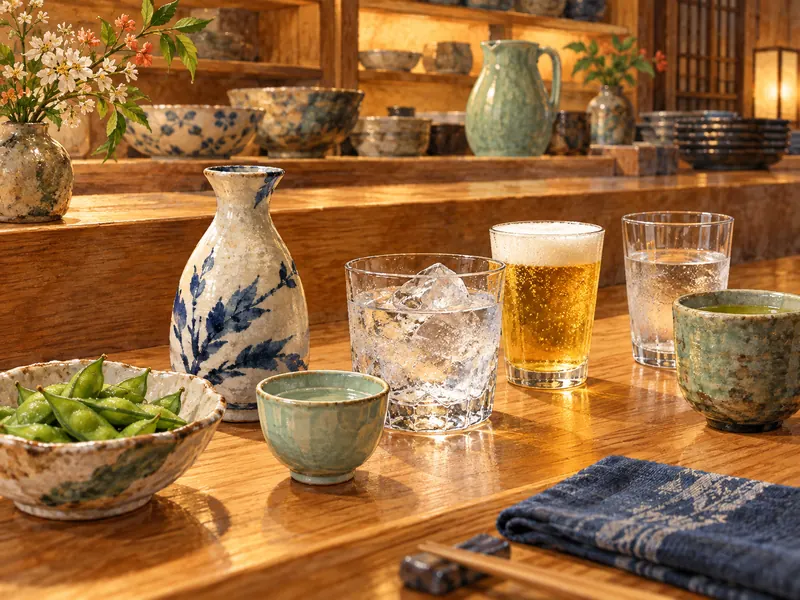
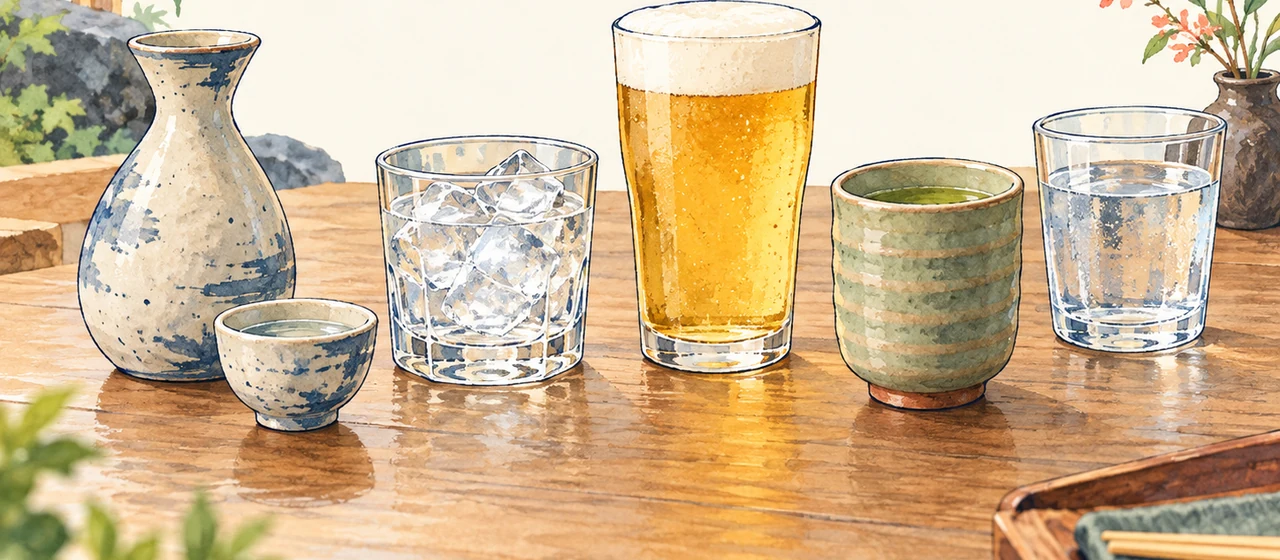
Sake, shochu with ice and a small beer served alongside tea and water on a warm wooden restaurant counter.

Sake is brewed from rice. Shochu is a distilled spirit made from ingredients such as sweet potato, barley or rice; it differs from beer in production and flavor. English “sake” usually means nihonshu, while Japanese “osake” can mean alcoholic drinks in general.

A category alone does not tell you how sweet or strong a drink is. Explain the kind you want and your flavor preferences so staff can help you choose from what they actually serve.

Remember this!
  • Ask for “nihonshu” when you mean Japanese sake.
  • Check alcohol content on the menu or label.
See the steps and checks
  1. For beer, check whether the menu offers draft beer (nama biru), bottled beer (bin biru), or other options.
  2. Shochu and sake are different drinks. A straight spirit and a mixed drink can also have very different strengths.
  3. Sweet-tasting drinks such as umeshu or lemon sours may contain alcohol. Do not assume a fruity name means alcohol-free.

Official guidance checked 2 October 2026
2Check the size & price

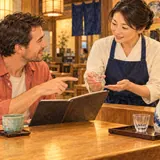
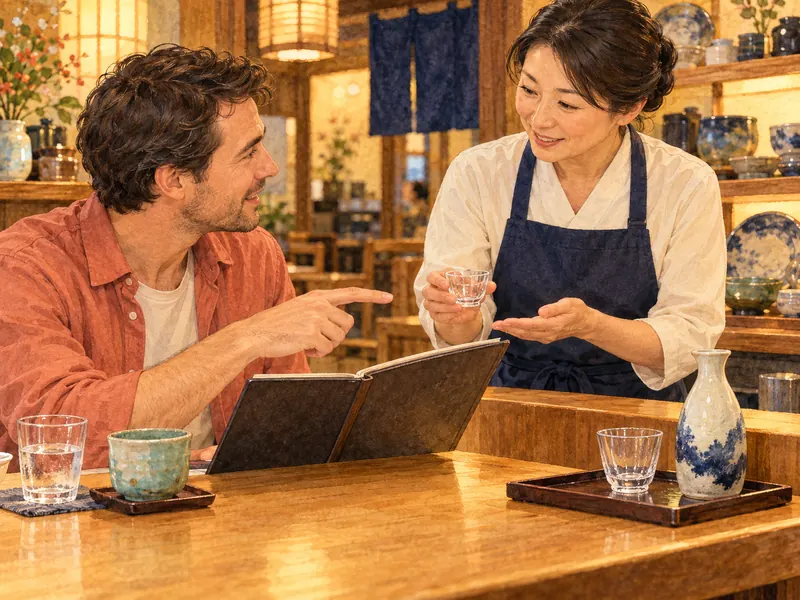
An adult diner asks a server about a small sake glass and a larger carafe before ordering at a Japanese restaurant counter.

A glass, carafe and bottle contain different amounts, and a “glass” is not a fixed size across restaurants. If you want to try a little sake, ask whether a small glass is available and how much it holds. Give a budget when requesting a recommendation.

Tokkuri describes a serving vessel, not a guaranteed volume. Clarifying whether you want individual drinks or one bottle to share helps avoid unexpected quantities and charges.

Remember this!
  • Confirm the volume and tax-inclusive price first.
  • Ask whether a smaller serving is available.
See the steps and checks
  1. “Kore wa nan miririttoru desu ka?” asks how many milliliters it contains. You can also ask, “Is this price for one glass?”
  2. For a recommendation, give the dish and a per-glass spending limit rather than leaving the budget open.
  3. Check the total volume and price of a tasting set too. Several small-looking cups can add up, and you do not have to finish them.
  4. At an izakaya or bar, ask about otoshi appetizers, cover charges and any extra mixer charges before ordering. Whether otoshi can be declined depends on the venue.

Official guidance checked 2 October 2026
Restaurant payment and manners basics →

3Choose temperature & style

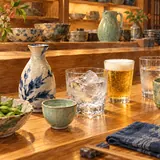
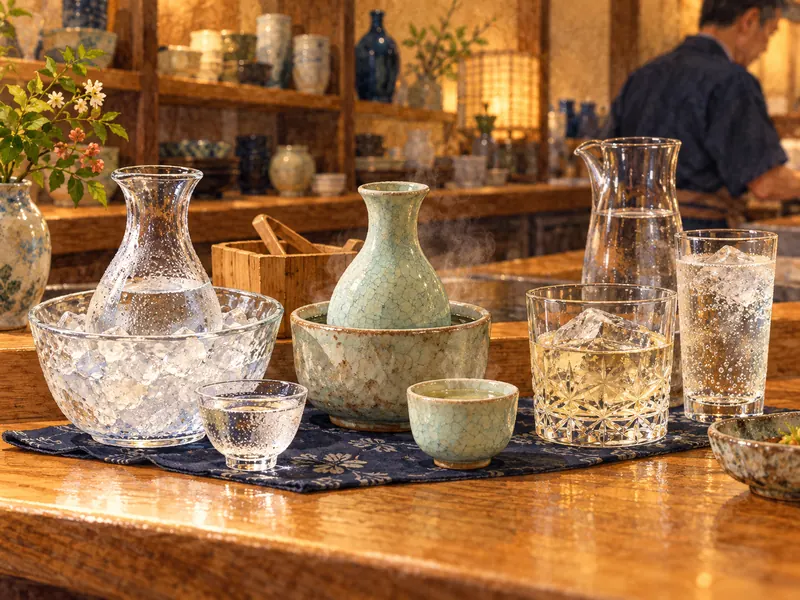
A restaurant serving station presents chilled and gently warmed sake, shochu with ice and soda, and water for choosing a serving style.

Sake can be chilled, served at room temperature, or warmed; the aroma and flavor change with temperature. What works depends on the bottle and your preference. For shochu, ask about ice, cold water, hot water or soda mixers offered by the shop.

Hiya can mean room-temperature sake. If you want it chilled, say “reishu” or “cold sake” clearly. Warm sake does not automatically mean inexpensive or poor-quality sake.

Remember this!
  • Say chilled, room temperature or warm for sake.
  • Specify the mixer when ordering shochu.
See the steps and checks
  1. Ask, “Would you recommend this sake chilled or warmed?” The restaurant and bottle determine which options are available.
  2. “Mugi shochu o soda-wari de” means barley shochu with soda. Recipes and strengths vary, so ask when alcohol content matters to you.
  3. Take care with warm cups and drinks. Water or ice changes dilution; it does not remove the alcohol.

Official guidance checked 2 October 2026
4Match the meal & your taste

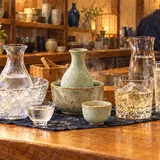
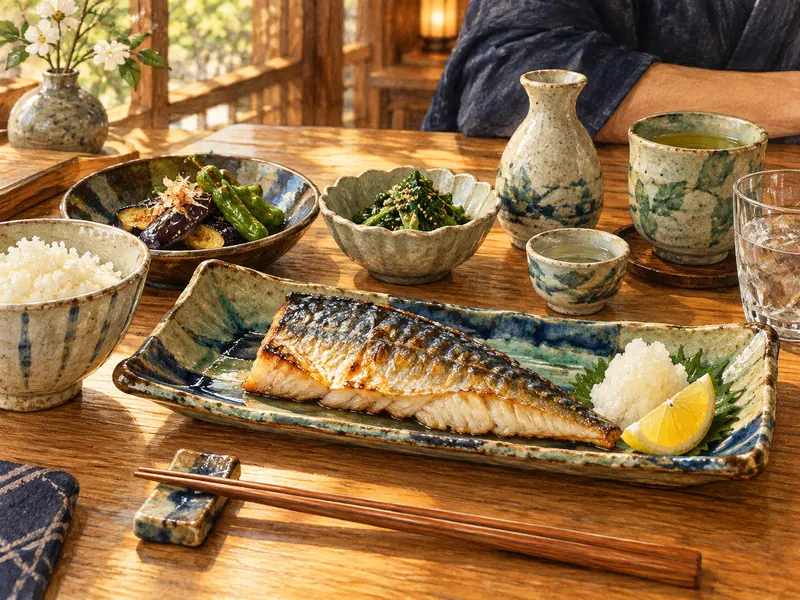
A grilled fish meal with seasonal vegetables, a modest sake cup and green tea on handmade ceramic dishes.

The food’s seasoning can help you choose. A lighter sake with a delicate dish, or a fuller-flavored one with grilled food, are possible starting points. Personal taste and the particular drink matter more than a fixed pairing rule.

Sushi does not require sake, and fried food does not require beer. If you want alcohol, tell staff what you are eating and what flavors you like. Tea or water can accompany the same meal.

Remember this!
  • Name the dish and the flavors you prefer.
  • Let your own taste guide the pairing.
See the steps and checks
  1. Try a concrete question: “Do you have something not too fragrant to go with this grilled fish?”
  2. Beyond sweet or dry, descriptions such as light-bodied or not too aromatic can help staff understand your preference.
  3. You do not need a new drink for every dish. Stay with one choice, or an alcohol-free drink, if you prefer.

Official guidance checked 2 October 2026
Explore sushi restaurant choices and ordering →

5Feel free to choose no alcohol

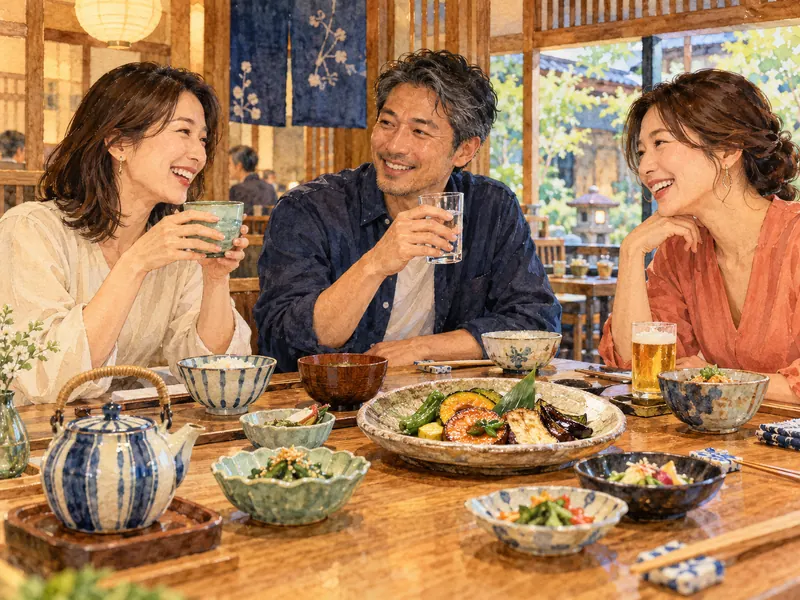
Three adult friends enjoy a restaurant meal with tea, water and a small beer, comfortably choosing their own drinks.

“Kyo wa nomimasen” means “I am not drinking today.” You can join a toast with water or a soft drink. For an alcohol-free option, check the actual alcohol content and, when needed, a 0.00% label rather than relying only on the menu name.

You do not owe a detailed explanation for declining. Ask before refilling someone’s glass and respect their answer. Pouring your own drink is also fine; no one has to finish a glass or keep pace with other people.

Remember this!
  • You can decline a drink or a refill.
  • Ask before pouring for someone else.
See the steps and checks
  1. Ask, “Do you have drinks without alcohol?” Tea, water and juice are possible choices.
  2. Low-alcohol and trace-alcohol drinks are not alcohol-free. If you need to avoid alcohol completely, confirm the label and ingredients with staff.
  3. You may refuse drinking games or pressure for another round. If you drink, go slowly, stop whenever you want, and switch to water if you prefer.

Official guidance checked 2 October 2026
6Check age & the trip home

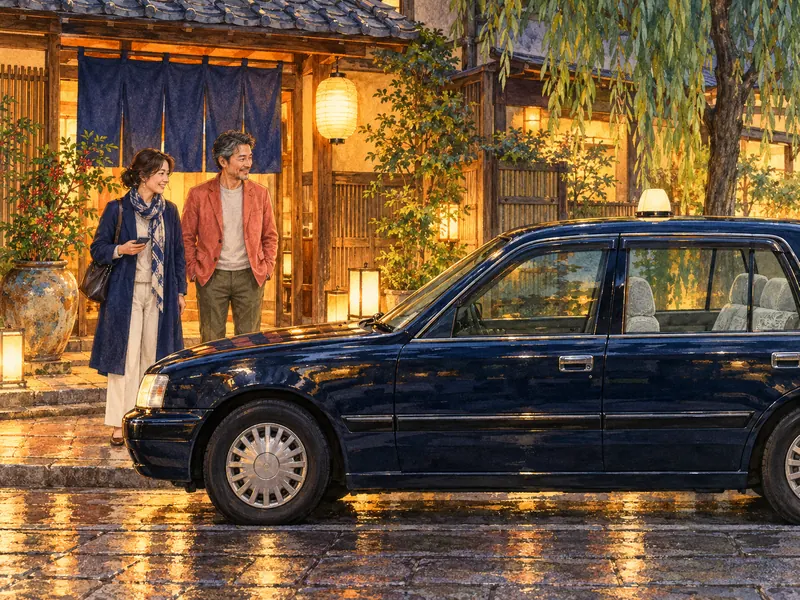
Adult restaurant guests wait on the sidewalk for a taxi outside a warmly lit Japanese restaurant.

Japan’s legal drinking age is 20, even though the age of adulthood is 18. After drinking alcohol, do not drive a car, ride a bicycle or use an electric scooter. Decide how to get home before you start drinking.

“Only a little” or “I do not feel drunk” is not a reason to drive. Arrange a driver who will not drink, check the last public transport, or use a taxi so your journey does not depend on drink-driving.

Remember this!
  • Alcohol is for ages 20 and over; expect ID checks.
  • Plan a journey home without driving.
See the steps and checks
  1. A venue may ask for proof of age. Check what identification it accepts.
  2. If you arrived by car, bicycle or electric scooter, either do not drink or leave it behind and choose another safe way home.
  3. Alcohol can remain the next morning. Do not rely on a fixed number of waiting hours as a guarantee that you can drive.

Official guidance checked 2 October 2026

✿ Summary ✿

Check the serving size, alcohol content, price and serving style before ordering. There is no single correct food pairing; tea and water are options too. Respect everyone’s choice to drink or decline, and arrange transport without driving, cycling or riding an electric scooter if you drink alcohol.

Japanese drinks: a first guide — an illustrative dining scene