

My Page

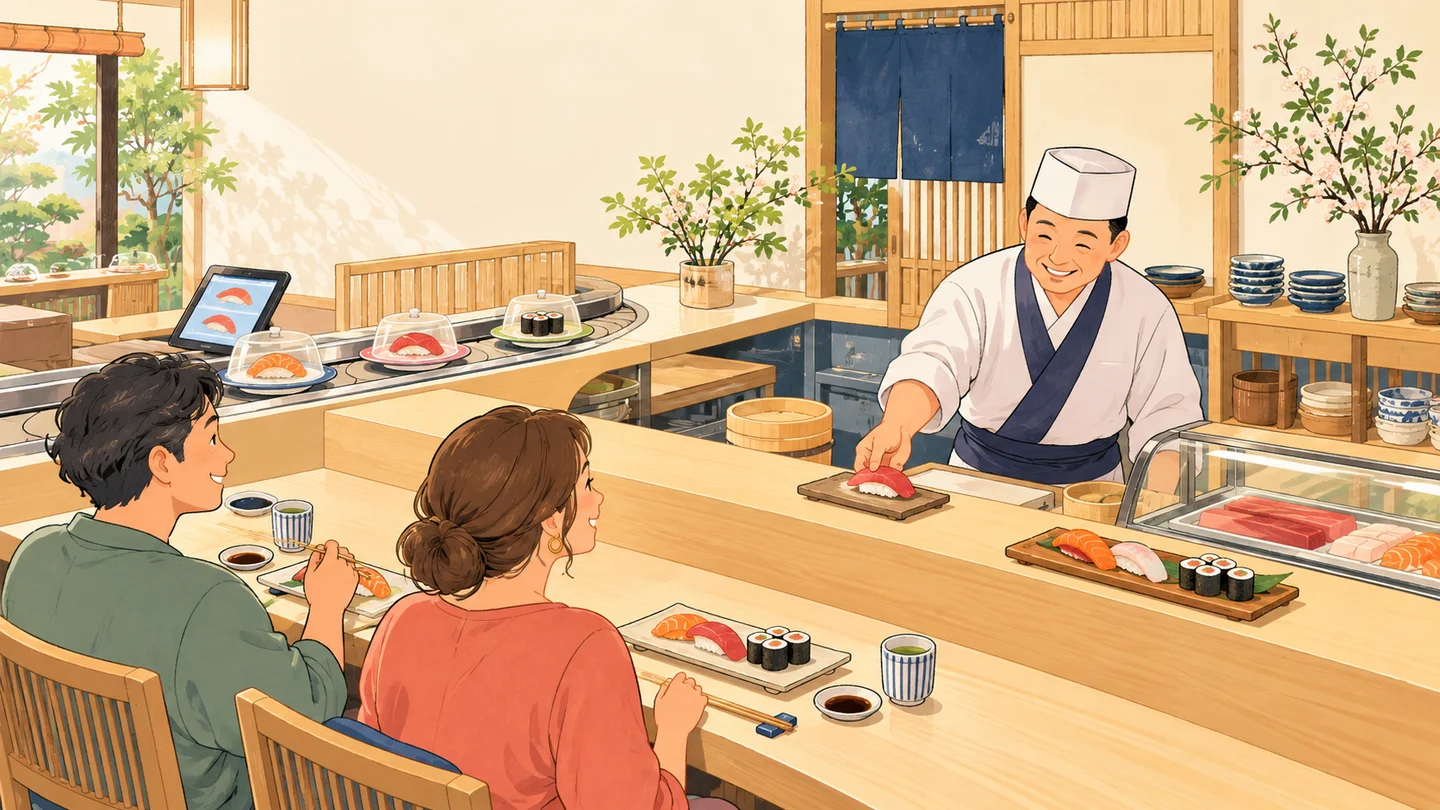
Your guide to sushi restaurants — an illustrative dining scene

A deeper guide to food & restaurants

Your guide to sushi restaurants

Choose a shop. Order at your pace.
Enjoy sushi with a little confidence.

✿ What you will learn ✿

Conveyor sushi, a set or omakase?
Check the budget and ordering method first,
then make eating and checkout feel simpler.

✿ Key points ✿

Your guide to sushi restaurants — an illustrative dining scene

✿ Contents ✿

  1. 1. Pick a sushi shop 〉
  2. 2. Choose your order 〉
  3. 3. Hands or chopsticks 〉
  4. 4. Wasabi & ingredients 〉
  5. 5. Use the ordering screen 〉
  6. 6. Time & payment 〉

✿ Frequently asked questions ✿

Q Is all sushi raw fish? +

No. Sushi combines vinegared rice with toppings such as seafood, egg or vegetables, including cooked options. Menus and preparation vary; if you avoid raw food, ask about the ingredients and cooking before ordering.

Q Can I ask for no wasabi or a fork? +

Yes, ask before preparation. Some shops serve wasabi separately. Utensils and changes vary by restaurant, so check when booking if they are essential.

Q May I ask the price of omakase? +

Yes. Confirm the course price including tax, drinks, extras, any service charge and cancellation conditions before booking or ordering.

1Pick a sushi shop

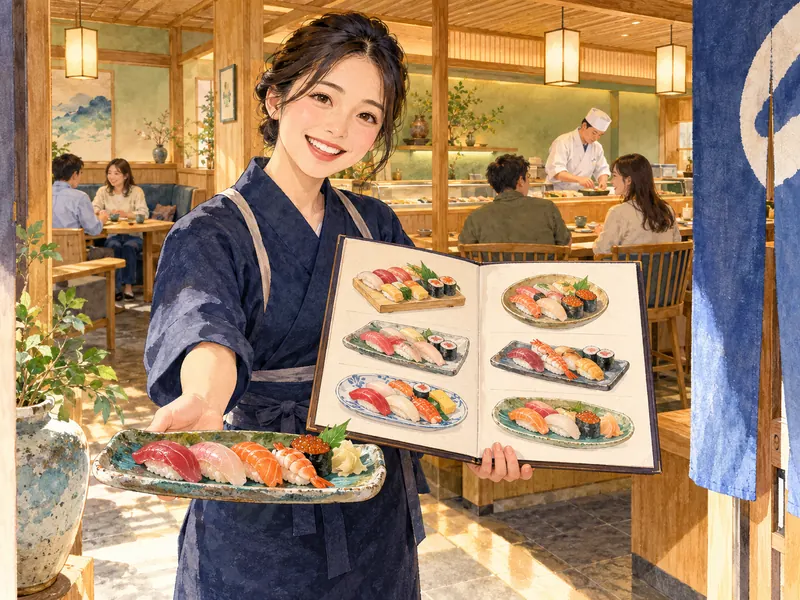
A host presents a picture menu beside counter and table seating in a welcoming sushi restaurant.

Options include screen-order restaurants, neighbourhood shops with sets, and omakase courses chosen by the chef. A counter does not automatically mean a luxury meal, and conveyor-style sushi is not all one price. Look at the menu and booking method, then choose for your budget and the kind of meal you want.

For a booked course, sharing the party size, start time and ingredient restrictions ahead of time helps the restaurant prepare. What it can accommodate varies.

Remember this!
  • Check the course and total before booking.
  • Include drinks, extras and cancellation terms.
See the steps and checks
Choose a format
FormatTypical orderingCheck first
Conveyor / order-laneScreen, paper slip or staffItem prices and entry check-in
Shop with fixed setsAssortment, then optional extrasWhat a set includes; lunch vs dinner
Omakase courseChef chooses the sequencePrice, dietary accommodation and booking terms
  1. Check the official menu for individual orders, fixed sets or courses.
  2. For a course, check tax, any service charge, separate drinks and expected meal length. Ask the shop if the booking page is unclear.
  3. Try “Hajimete desu. Yosan wa hitori … en kurai desu” (It is my first visit. My budget is around … yen per person). Confirm what a recommendation includes before ordering.

Official guidance checked 2 October 2026
See the general restaurant guide

2Choose your order

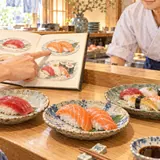
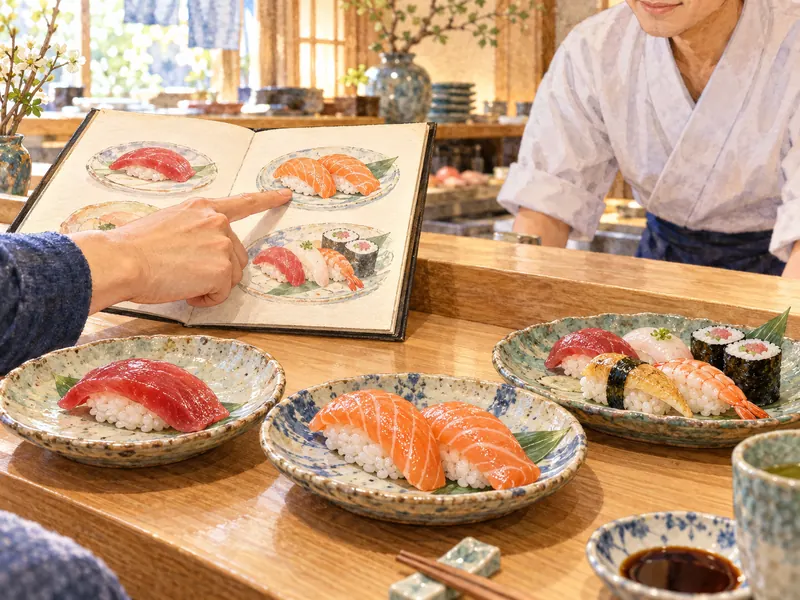
A diner compares a one-piece tuna plate, two salmon pieces and a sushi set with a picture menu.

One kan (一貫) counts a piece of sushi, but the number of pieces on a plate varies by item. Nigiri, rolls, gunkan and sashimi differ in both contents and portion size. Check the name, number of pieces and price together. Sashimi normally comes without vinegared rice.

Starting with a small order makes it easier to judge portions and your preferences, and helps avoid leftovers. At a course meal, ask whether extras cost more.

Remember this!
  • Read the piece count and price together.
  • Check whether soup and drinks are included.
See the steps and checks
  1. For a plate, try “Maguro o hitosara onegaishimasu” (One plate of tuna, please). If the shop orders by piece, confirm the number with staff.
  2. A roll may mean one cut roll or one hand roll. Check its picture and description; ask “Nan-kan desu ka?” (How many pieces?) about an assortment.
  3. If you avoid raw ingredients, ask for a fully cooked topping. Do not infer that the centre is fully cooked from a name such as aburi (seared).

Official guidance checked 2 October 2026
See the everyday Japanese food guide

3Hands or chopsticks

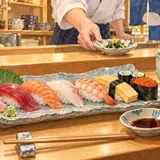
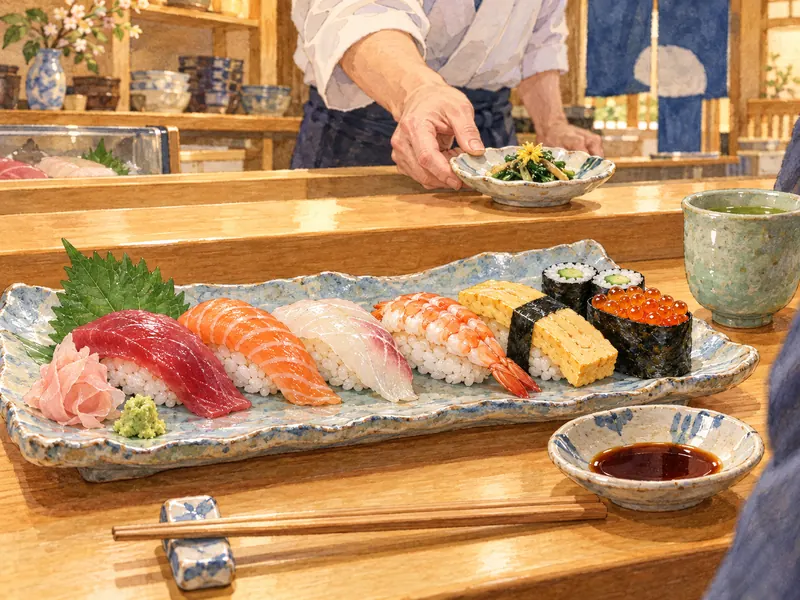
Glossy nigiri, a small soy dish and chopsticks on a warm counter as the chef serves a side dish.

You can eat nigiri with clean hands or chopsticks, whichever is easier. Use soy sauce sparingly; lightly touching the topping to it helps keep the rice together. Check whether a piece already finished with sauce or salt is intended to be eaten as served.

You do not need perfect technique to enjoy the meal. If one bite is difficult, do not force it; ask about a manageable size or utensil.

Remember this!
  • Use the method that is comfortable for you.
  • Check seasoning before adding a little soy sauce.
See the steps and checks
  1. Clean your hands before using them. Use chopsticks or another suitable utensil for sashimi or delicate dishes.
  2. Ask “Shoyu wa tsukemasu ka?” (Should I add soy sauce?) for that particular piece. Taste before pouring a lot.
  3. If chopsticks are difficult, try “Foku wa arimasu ka?” (Do you have a fork?). Availability varies, so check when booking if it is essential.

Official guidance checked 2 October 2026
See the everyday Japanese food guide

4Wasabi & ingredients

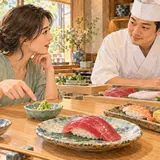
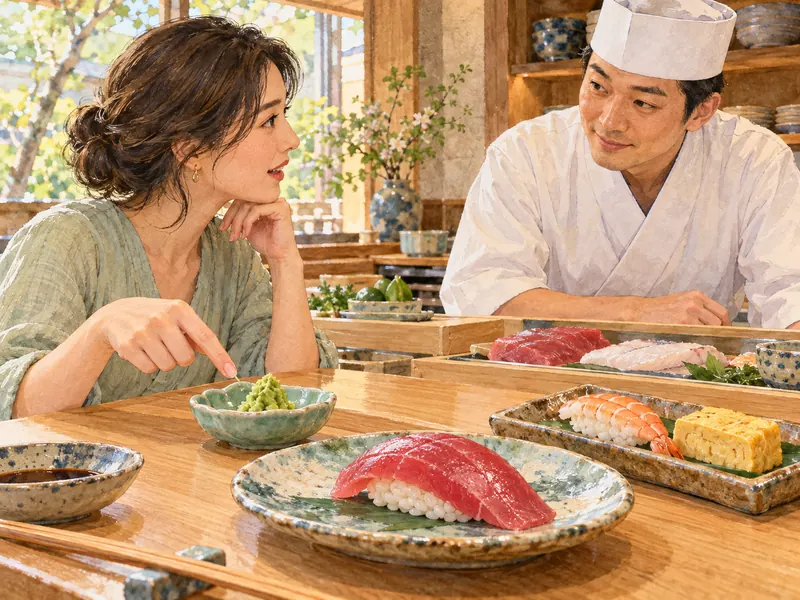
A diner asks a sushi chef about wasabi and ingredients before eating.

Some shops put wasabi inside sushi; others serve it separately. Ask before preparation: “Wasabi nuki de onegaishimasu” (No wasabi, please). Explain an allergy separately from a dislike, naming exactly what you must avoid, such as seafood, egg, wheat or soy.

Removing a topping does not prevent contact through sauces or preparation equipment. If the shop cannot confirm the accommodation you need, do not eat that dish; choose another meal or restaurant.

Remember this!
  • Request no wasabi before the sushi is made.
  • Check toppings, sauces and preparation for allergies.
See the steps and checks
  1. Say “... arerugi ga arimasu. Kono ryori ni haitte imasu ka?” (I have an allergy to ... . Is it in this dish?) and review the current allergen information with staff.
  2. If relevant to your allergy, ask about shared knives, boards and gloves. A blank cell or “not used as an ingredient” is not a guarantee against unintended contact.
  3. For vegetarian or vegan meals, check stocks, seasonings and accompaniments as well as roll fillings. A dish available at one shop is not guaranteed everywhere.

Official guidance checked 2 October 2026
See the general restaurant guide

5Use the ordering screen

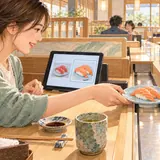
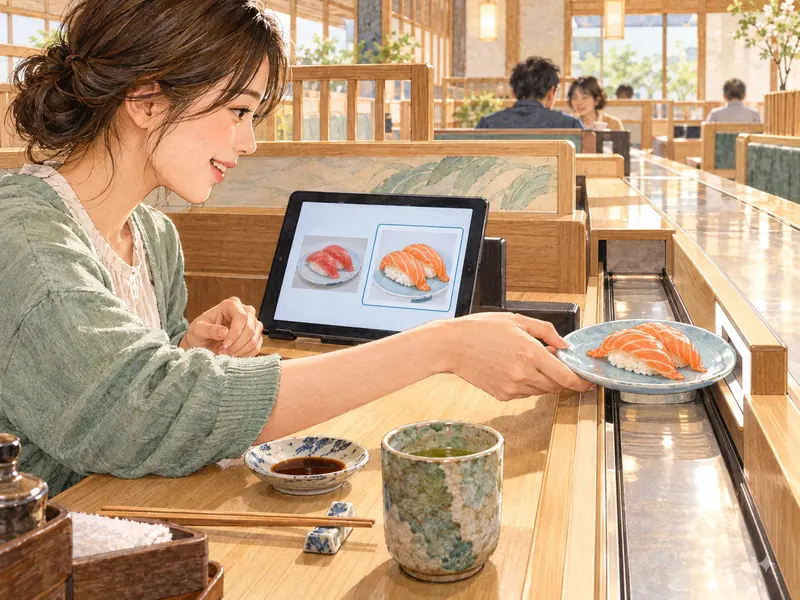
A diner checks the order screen and collects the sushi plate delivered to their seat.

Follow the check-in machine or staff to your seat. On some screens, selecting an item does not submit it: check the quantity and the order history after confirmation. Some lanes carry freely selectable plates; others deliver specific orders. Follow the arrival instructions for your own seat.

If you touch or take the wrong plate, ask staff rather than returning it to the lane. Checking the system first makes the visit easier for you and other diners.

Remember this!
  • Check order history before tapping again.
  • Ask before handling an unfamiliar plate or device.
See the steps and checks
  1. Start with one item, check its price and quantity, and submit it. If the screen is slow, do not repeatedly tap: check history or ask staff.
  2. Use the arrival sound, seat number and screen instructions to identify your order. Leave other diners’ orders alone.
  3. Follow the shop’s instructions for plate slots, covers and hot-water tea taps. Do not put other objects in a plate slot; use the staff-call button if unsure.

Official guidance checked 2 October 2026
6Time & payment

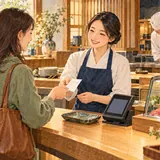
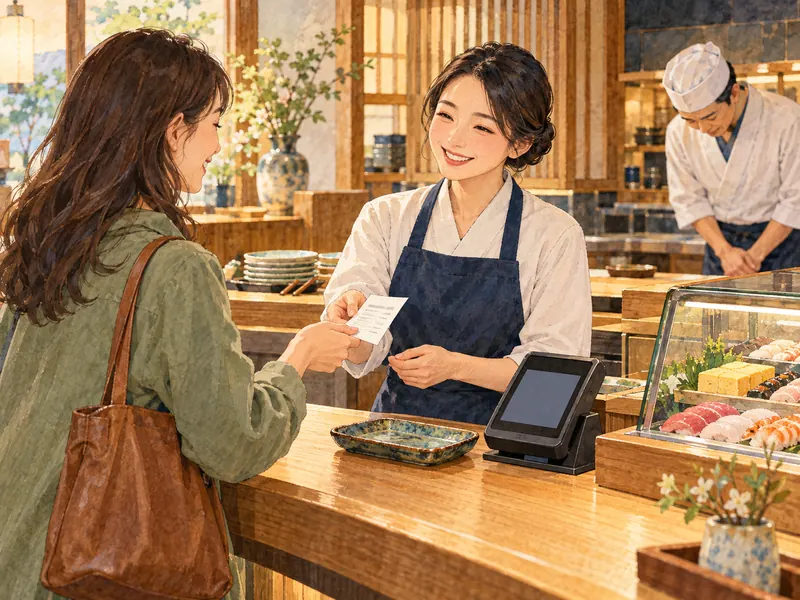
A diner checks a receipt with the cashier and exchanges a courteous farewell at a sushi restaurant.

When you finish ordering, use the checkout button or ask staff how to pay. A shop may count plates, use your order record or direct you to a self-checkout. Credit cards, QR payments and transport IC cards are separate options; acceptance of one does not imply the others.

A course may be prepared around a set start time. Contact the shop as soon as you know you will be late or unable to attend, and follow the booking’s change and cancellation terms.

Remember this!
  • Confirm the bill before following checkout instructions.
  • Check your booking time and payment method beforehand.
See the steps and checks
  1. Say “Okaikei onegaishimasu” (The bill, please). Take the bill or seat-number slip to the designated register if instructed.
  2. Read the payment information for that branch. For example, Sushiro lists branch-specific QR exceptions and says electronic money is not accepted.
  3. Save the booked restaurant’s contact details. Leave room for travel afterward; ask about the meal length before entering if you are short on time.

Official guidance checked 2 October 2026

Read the drinks and non-drinking guide

✿ Summary ✿

Match the restaurant to your budget and preferred format. For individual orders, check pieces and prices and order gradually. Use comfortable utensils, check seasoning and wasabi, and discuss allergies or dietary restrictions ahead of time. Confirm booking times and payment methods before the visit.

Your guide to sushi restaurants — an illustrative dining scene