
My Page

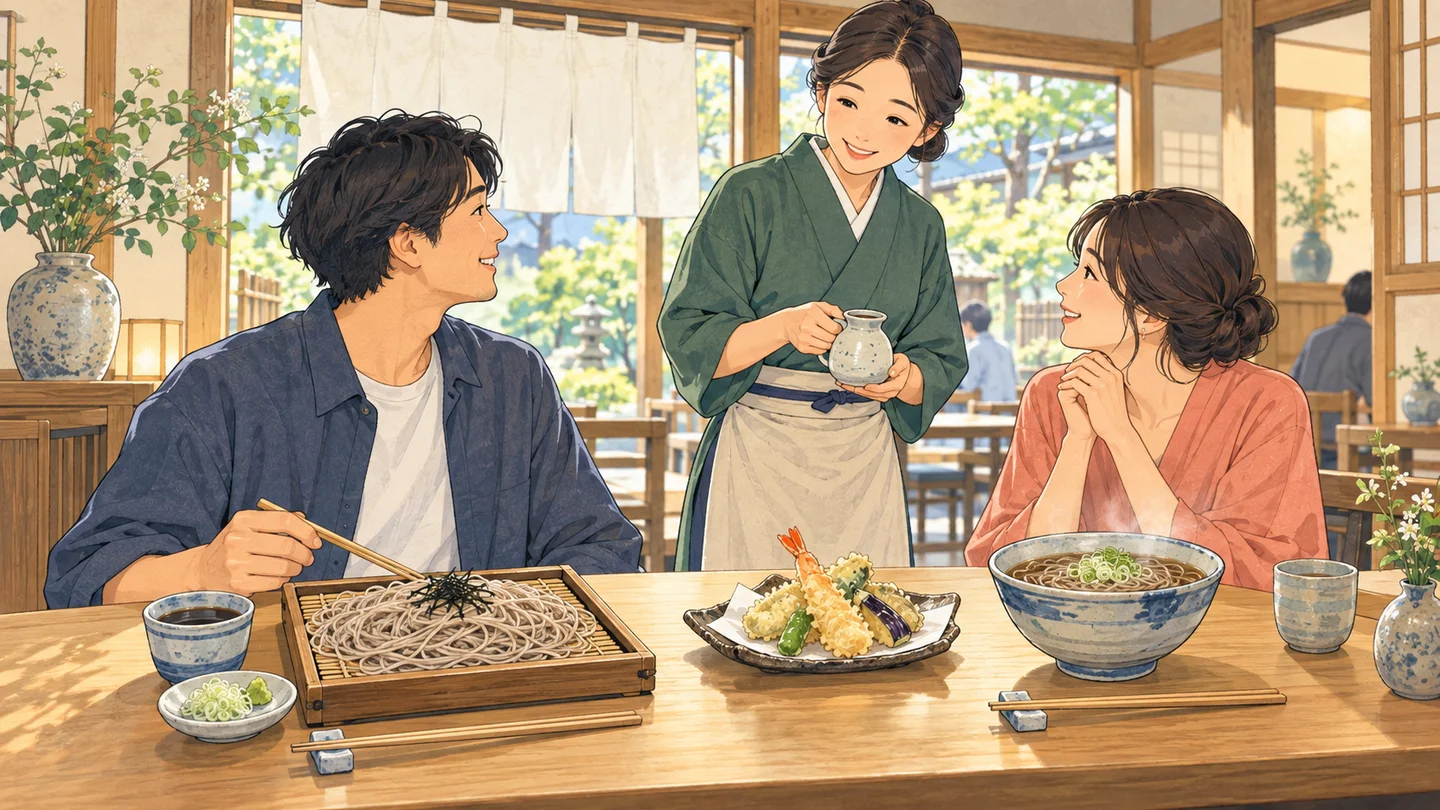
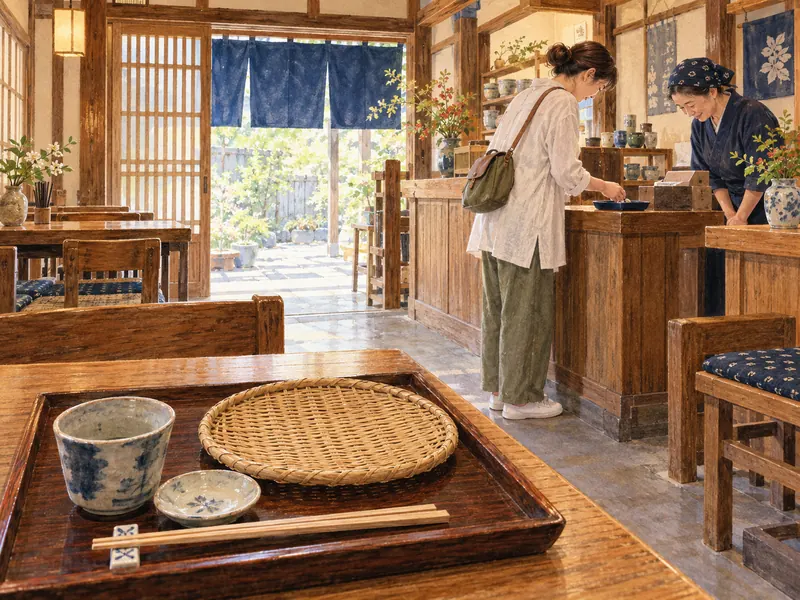
Your guide to soba restaurants — an illustrative dining scene

A deeper guide to food & restaurants

Your guide to soba restaurants

From “Is it still open?”
to the last cup of sobayu.

✿ What you will learn ✿

Start with the opening hours.
Choose hot or cold soba, then find practical help
with ordering, eating and paying.

✿ Key points ✿

Your guide to soba restaurants — an illustrative dining scene

✿ Contents ✿

  1. 1. Hours & sold-out signs 〉
  2. 2. Cold or hot soba 〉
  3. 3. Order the right portion 〉
  4. 4. Sauce, toppings & sobayu 〉
  5. 5. Buckwheat, wheat & stock 〉
  6. 6. Pay & plan your visit 〉

✿ Frequently asked questions ✿

Q Do soba restaurants close before evening? +

It depends on the shop. Some serve lunch only, pause in the afternoon or close when sold out; others serve dinner. Check last orders and current notices as well as closing time.

Q Is sobayu tea? +

No. It is made with soba-cooking water or a similar buckwheat preparation. Where served, it can be mixed with leftover dipping sauce after the noodles. Anyone who needs to avoid buckwheat should not drink it.

Q Does juwari soba guarantee a wheat-free meal? +

No. The noodle flour ratio does not establish the ingredients of the whole meal or whether contact occurs during preparation. Check sauce, tempura, shared pots and utensils, and ask whether the shop can meet your needs.

1Hours & sold-out signs
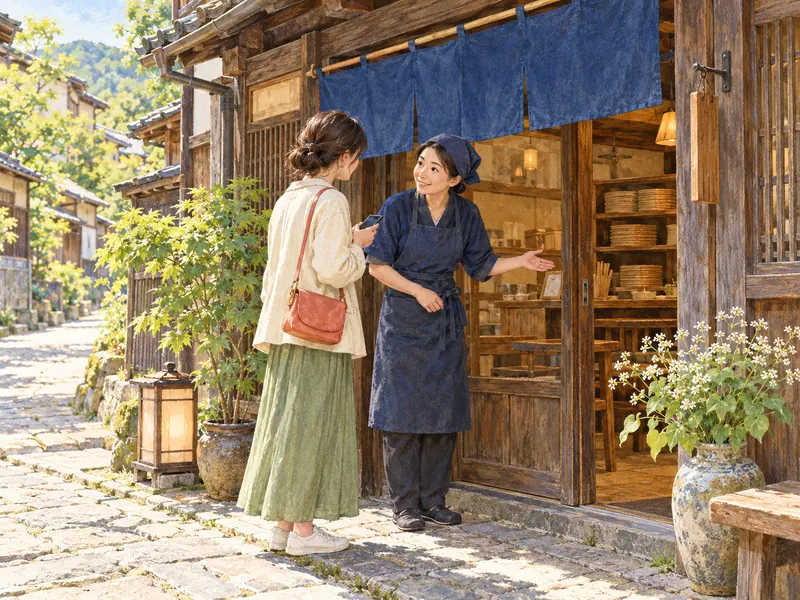
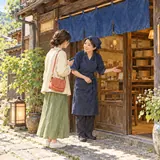
A visitor checks the day’s service and noodle availability with staff at a wooden soba shop entrance.

Some soba shops open only for lunch, pause between lunch and dinner, or close when their noodles sell out. This is not true of every soba restaurant. Before planning a late meal, check opening hours, last orders and the day’s notices rather than assuming food will be available until evening.

A shop making a limited amount of noodles may run out before its posted closing time. Planning a visit with room to spare is more reliable than leaving it until after the rest of your sightseeing.

Remember this!
  • Check breaks and last orders as well as closing time.
  • For sell-out shops, check again before you set off.
See the steps and checks
Read the opening notice
NoticeMeaningBefore you visit
昼のみ / lunch onlyNo dinner service that dayPlan another dinner option
中休み / breakClosed between servicesCheck the reopening time
L.O. / last orderFinal time to place an orderDo not aim for closing time
売り切れ次第終了Closes when noodles sell outCheck the day’s availability
  1. Look for 昼のみ (lunch only), 中休み (afternoon break), 売り切れ次第終了 (closes when sold out) and L.O. (last order). Last order is earlier than closing at some shops.
  2. For example, Soba Yui lists a short lunch service and sell-out closure. Sobadokoro Miyoshi lists separate lunch and evening hours, with a lunch-only day. These are individual examples, not national opening times.
  3. For a special journey, check the latest notices and calendar too. Ask whether reservations are required or noodles can be held; keep an alternative meal in mind if they sell out.

Official guidance checked 2 October 2026
2Cold or hot soba

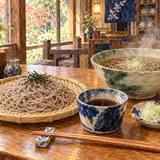
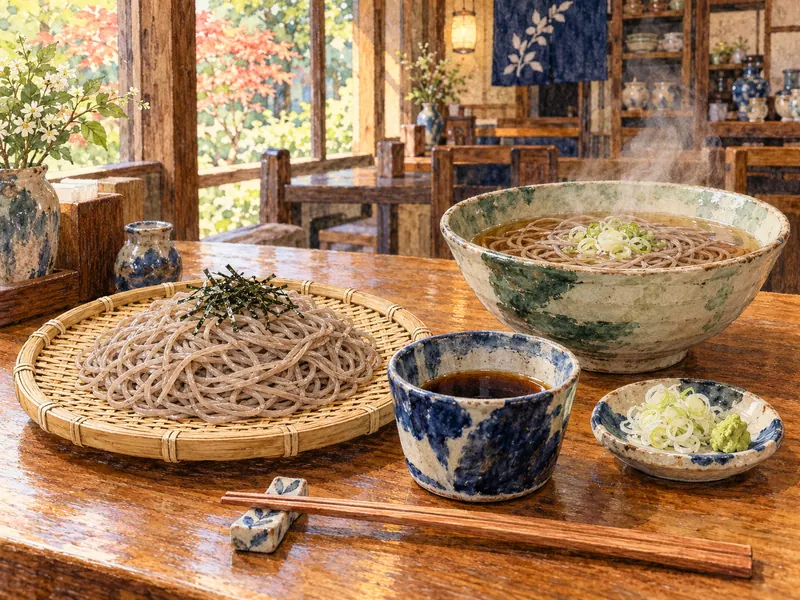
Cold seiro soba and a steaming bowl of hot kake soba on a wooden table.

Mori, zaru and seiro commonly mean cold noodles with a separate dipping sauce. Kake is soba in hot broth. Some dishes, such as kamo seiro, pair cold noodles with a hot dipping broth. If the name is unclear, use the picture and the restaurant’s description.

The use of seaweed and the differences between mori, zaru and seiro vary by shop. You only need to establish what that shop will serve, rather than memorise one universal rule.

Remember this!
  • Check the temperature of both noodles and sauce.
  • Ask how a local soba style is served.
See the steps and checks
  1. Ask separately: “Tsumetai soba desu ka?” (Are the noodles cold?) and “Tsuyu wa atatakai desu ka?” (Is the sauce warm?).
  2. For tempura, duck or grated-radish soba, check whether the toppings come separately or in the broth.
  3. Regional styles differ: Izumo warigo soba, for example, has sauce poured onto the noodles. Ask staff how to use the sauce if the arrangement is unfamiliar.

Official guidance checked 2 October 2026
Compare the udon restaurant guide

3Order the right portion

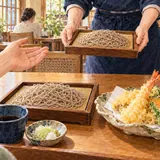
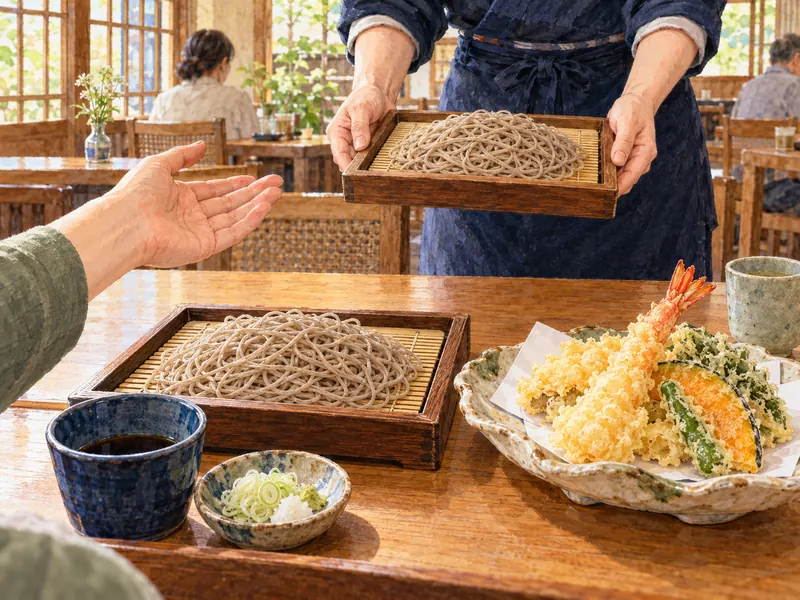
A diner discusses an extra serving beside a regular soba tray and a separate plate of tempura.

Once you choose a dish, check regular or large portions and any tempura or rice set. Ordering differs between a specialist restaurant and a quick standing noodle shop. Follow entrance instructions: buy a ticket first where required, or wait to order at your table.

A serving is not the same size everywhere. Asking whether a larger portion or extra noodles are available helps avoid ordering too much or discovering too late that you wanted more.

Remember this!
  • Check noodle size and what the set includes.
  • Follow the shop’s ticket or table-order system.
See the steps and checks
  1. Try “Seiro o hitotsu onegaishimasu” (One seiro soba, please). For a larger portion: “Omori ni dekimasu ka?” Check the extra cost.
  2. Tenzaru is one example of soba with tempura. A separate order simply called tempura may not include noodles, so check the set contents.
  3. If you need to leave by a specific time, ask before ordering. Hand-prepared noodles or freshly fried dishes are not guaranteed to be served immediately at every shop.

Official guidance checked 2 October 2026
4Sauce, toppings & sobayu

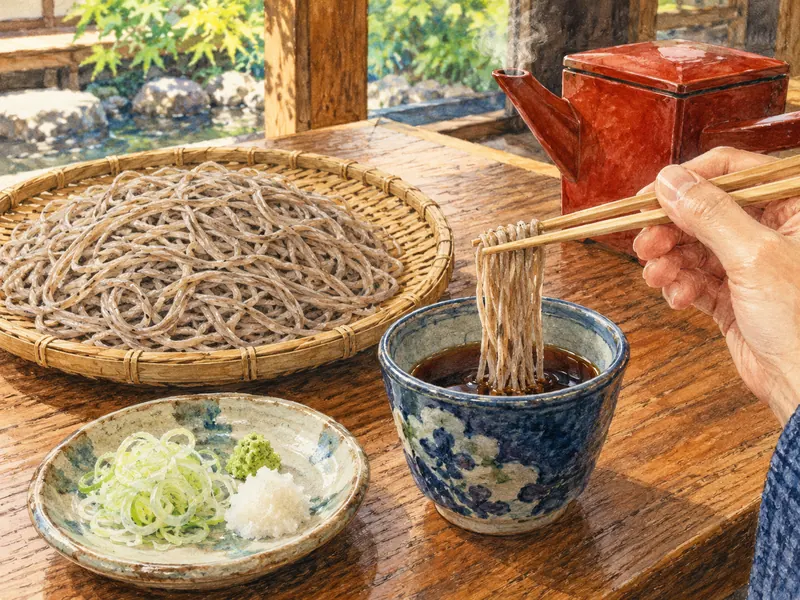
A small bundle of soba is dipped into a deep tsuyu cup, with sobayu ready on the table.

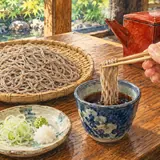
For dipping-style soba, take a manageable amount of noodles and adjust how much sauce you use. Add spring onion, wasabi or grated radish gradually. If sobayu is served after the meal, you can add it to leftover dipping sauce for a warm drink. Pour a little at a time; it may be hot.

Slurping is common, but you do not have to make a sound. Eat in a way that is comfortable for you. Sobayu is not available at every shop, and you do not need to finish it.

Remember this!
  • Add sauce and strong condiments gradually.
  • Check the heat before pouring sobayu.
See the steps and checks
  1. Start with a small bundle of noodles and a little sauce. Adjust to its strength; there is no need to measure a strict dipping depth.
  2. If you want to try sobayu, leave a little dipping sauce. Ask “Sobayu wa arimasu ka?” (Do you serve sobayu?).
  3. Follow the shop’s guidance if an extra cup or a regional serving style is provided. Sobayu uses noodle-cooking water or a similar buckwheat preparation, so do not offer it to someone avoiding buckwheat.

Official guidance checked 2 October 2026
See the everyday Japanese food guide

5Buckwheat, wheat & stock

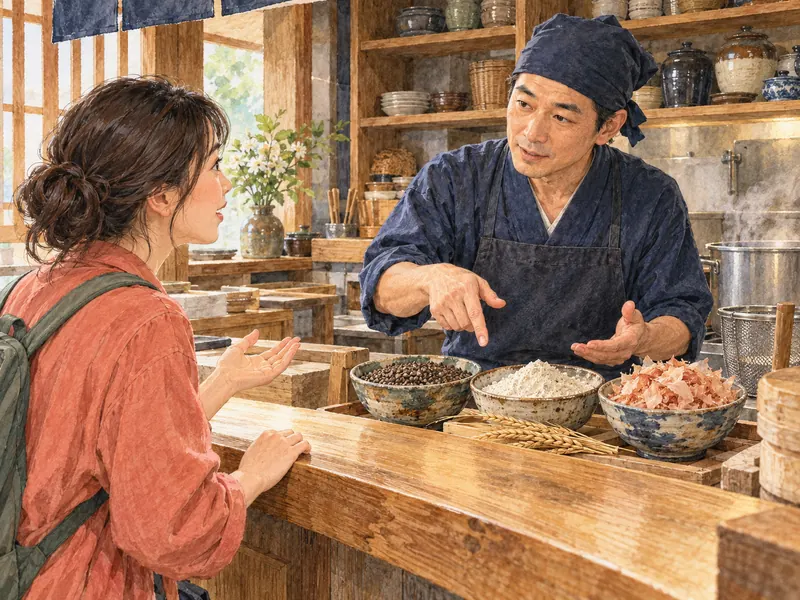
Before ordering, a visitor asks the cook about buckwheat, wheat and stock ingredients.

Soba contains buckwheat, and many noodles also include wheat flour. Juwari describes a noodle made entirely from buckwheat flour; it does not guarantee a wheat-free meal or kitchen. Check fish stock in the sauce, wheat in soy sauce, and wheat or egg in tempura separately.

Changing the noodles alone is not an allergy solution. Ask about shared pots, cooking water, strainers and frying oil too. If the required accommodation cannot be confirmed, do not order that meal.

Remember this!
  • Check buckwheat, wheat and sauce separately.
  • Discuss shared equipment and cooking water.
See the steps and checks
  1. Name the allergen: “Soba arerugi ga arimasu” (I have a buckwheat allergy) or “Komugi arerugi ga arimasu” (I have a wheat allergy). Check buckwheat tea, sobayu and buckwheat sweets too.
  2. Switching to juwari soba or udon may still involve shared pots or equipment. Explain the precautions advised by your clinician and ask whether the shop can meet them.
  3. For vegetarian or vegan meals, visible vegetables do not establish what is in the stock, sauce or accompaniments. Specify that your restrictions include stocks.

Official guidance checked 2 October 2026
Compare the udon restaurant guide

6Pay & plan your visit

A diner bows politely at checkout while finished soba dishes are left tidy on the table.

Ticket machines mean payment before eating; table-service shops may direct you to the register afterward. Some small soba shops are cash-only, so check before visiting. Some also offer small dishes and drinks before the noodles, but drinking alcohol is not required to enjoy soba.

If you want a long conversation after eating, check the shop’s atmosphere and any time limit. A restaurant for leisurely side dishes differs from a quick noodle stop.

Remember this!
  • Check prepayment, checkout and whether cash is needed.
  • Ask about the shop’s pace if you want a longer visit.
See the steps and checks
  1. Read the payment information at the entrance or on the menu. Soba Yui, for example, explicitly lists cash-only payment.
  2. After eating, say “Okaikei onegaishimasu” (The bill, please). Follow instructions about taking a slip to the till; at a self-service shop, locate the tray return.
  3. If ordering alcohol, plan the amount and your journey home first, and check last orders. If you are not drinking, ask what tea, water or other options are available.

Official guidance checked 2 October 2026

Read the drinks and non-drinking guide

✿ Summary ✿

Check opening hours, last orders and sell-out notices before visiting. Choose the noodle and sauce temperature, portion and set contents. Add condiments gradually and take care with hot sobayu. Check buckwheat, wheat, stocks and shared equipment when relevant, then follow the shop’s ordering and payment instructions.

Your guide to soba restaurants — an illustrative dining scene