My Page

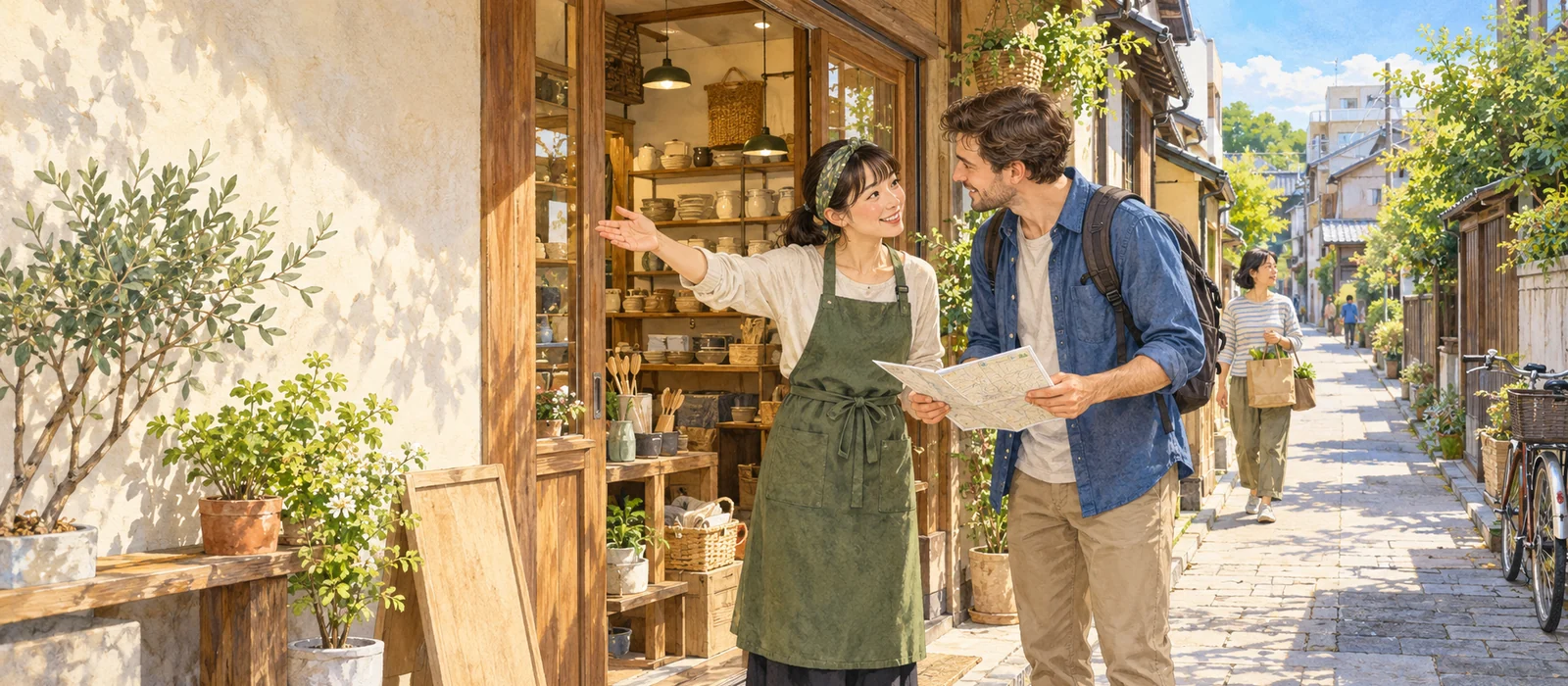
Considerate interactions with people — an illustrative scene

Start here

Considerate interactions with people

Start with a greeting and a clear question.
You do not need to get every detail perfect.

✿ What you will learn ✿

Different languages and customs do not prevent people from checking what each other means.
Treat the person as an individual, choose a suitable moment and keep your question clear.

Considerate interactions with people — an illustrative scene

✿ Frequently asked questions ✿

Q Is it rude if my Japanese is not fluent? +

Fluency is not required. Try short phrases, pointing or translation, and check that you were understood. Be mindful of the language and time the other person can offer.

Q Does a smile or nod mean permission? +

Not always. For something that needs consent, such as a photograph or borrowing an item, ask specifically and confirm clearly.

Q What should I do if I make a mistake? +

Pause, check the situation and, if needed, give a brief apology and correct it. Ask staff if you are unsure. One mistake does not need to overshadow the whole trip.

1Begin with a simple greeting
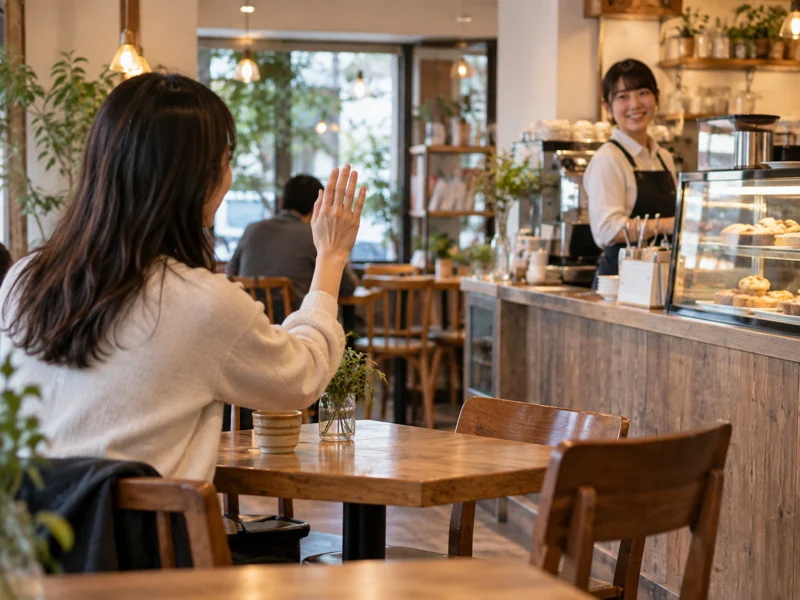
A visitor calmly getting a cafe worker’s attention

At a shop or reception desk, a simple “Konnichiwa” or “Sumimasen” can open an interaction. After receiving help, “Arigato gozaimasu” expresses thanks. You do not need an elaborate bow or a long speech.

If the person is serving someone or working, wait for an appropriate moment. A calm voice from nearby is usually clearer than calling loudly across the room.

Remember this!
  • Use “Sumimasen” to get someone’s attention.
  • Say thank you after receiving help.
Explore a little further

A greeting opens a possibility for interaction. Conversational style varies by person and situation; start with a natural, brief exchange rather than expecting the same response from everyone.
2Ask one clear question

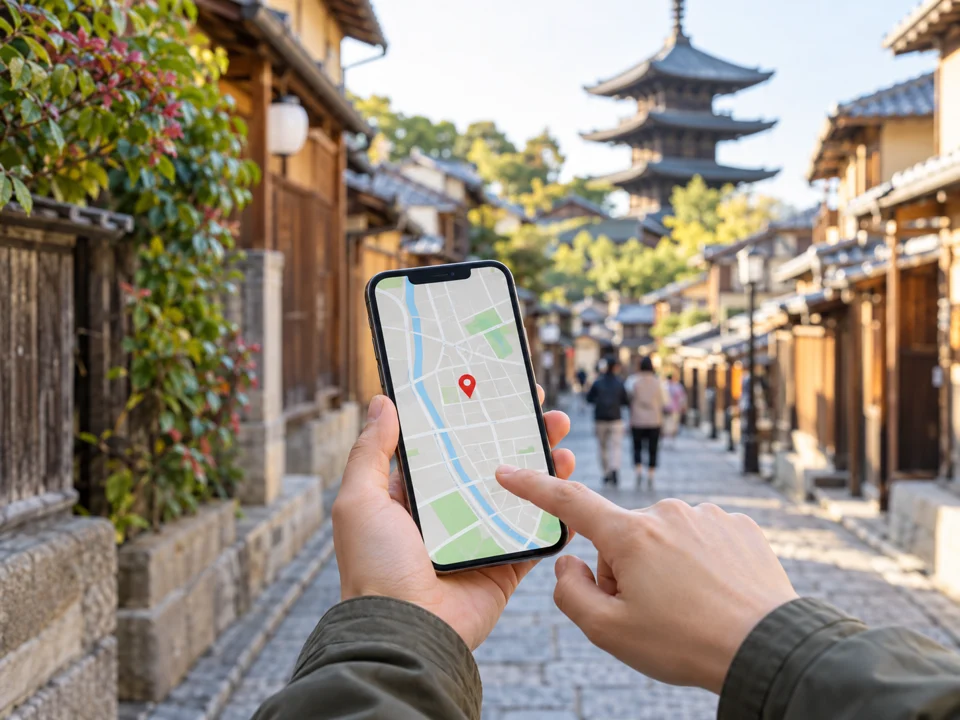
Pointing to a destination on a phone map

Try one request at a time: “One of these, please” or “Where is this station?” Pointing to an item or showing a place name on a map can make the question clearer.

Short sentences are easier to check than long passages in a translation app. Make sure the screen does not display unrelated personal information.

Remember this!
  • Ask one question at a time.
  • Show the place or item when words are not enough.
Explore a little further

For directions, showing your current position and destination on the same map can help. If the question is difficult to resolve, look for the relevant station desk or visitor information service.

3Check the details that matter

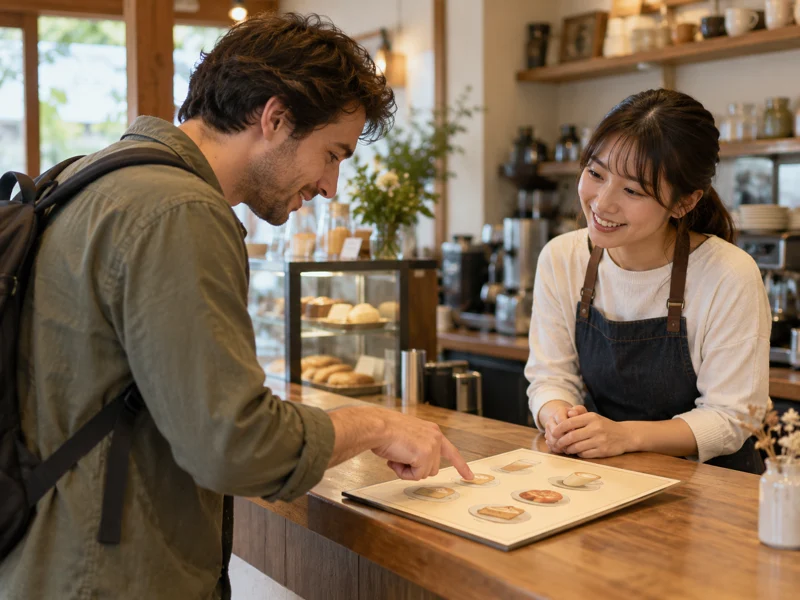
People checking an order together with a menu

Dates, prices, quantities and locations are easy to miscommunicate. For a booking or order, use a screen or paper to check “Is this correct?” You do not need to nod quickly when you have not understood.

The other person may also need time to check. Leave room for them to consult a colleague or written guidance.

Remember this!
  • Double-check important numbers and places.
  • Ask again if you are unsure.
Explore a little further

You can say “Mo ichido onegai shimasu” for “Once more, please” or “Yukkuri onegai shimasu” for “Slowly, please.” Confirm a clear answer about availability, and consider another option if it cannot be done.

4Follow the guidance for the place

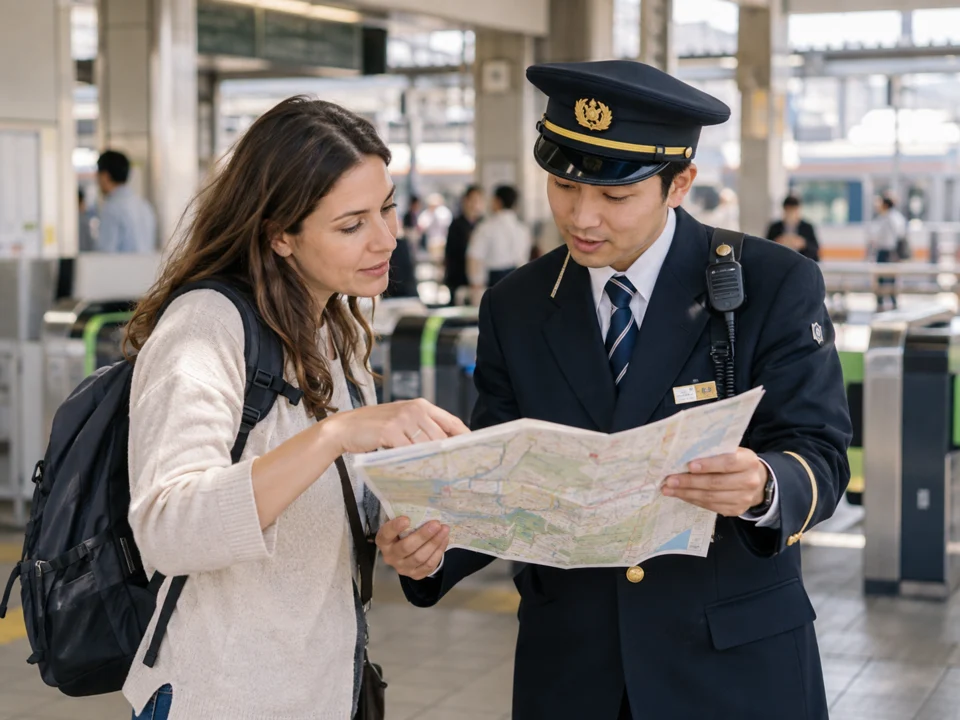
A traveller checking a map with a station staff member

Where to queue, whether to remove shoes and how seating works vary by venue. Look for signs and, if unsure, ask a specific question such as “Should I wait here?”

A procedure may support safety, cleaning or a fair queue. If you cannot follow it for a particular reason, ask staff about an alternative rather than struggling silently.

Remember this!
  • Read the signs and ask if they are unclear.
  • Ask about an accommodation or another way.
Explore a little further

A venue’s own guidance takes priority over a general guide. Read the detailed train, restaurant or shrine and temple article when that situation becomes relevant.

Official references checked 2 October 2026

5Respect privacy and a person’s choice

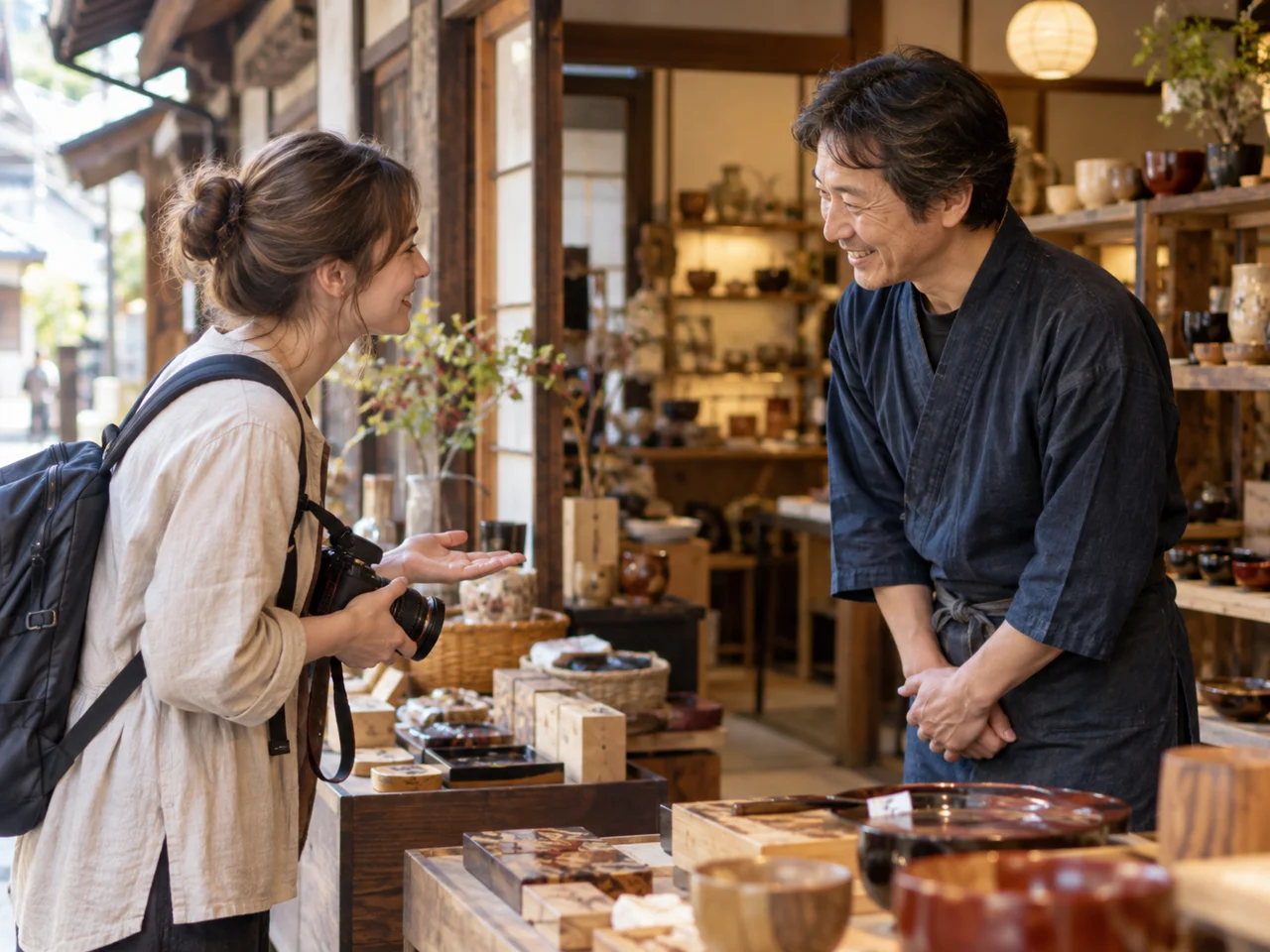
A traveller asking a shop worker about taking photographs

Before making someone the subject of a photo, ask if that is okay. Check photography conditions in shops, exhibitions and religious sites. If a person declines or seems unsure, put the camera down and choose another view.

Agreeing to a photo does not necessarily mean agreeing to its publication on social media. Keep a conversation brief if the person is busy or does not seem to want to continue.

Remember this!
  • Confirm consent before photographing someone.
  • Respect a choice to decline or not talk.
Explore a little further

Even where photography is allowed, consider other people’s privacy and work. Stand where you will not block a path or shop entrance.

Official references checked 2 October 2026

6Handle misunderstandings calmly

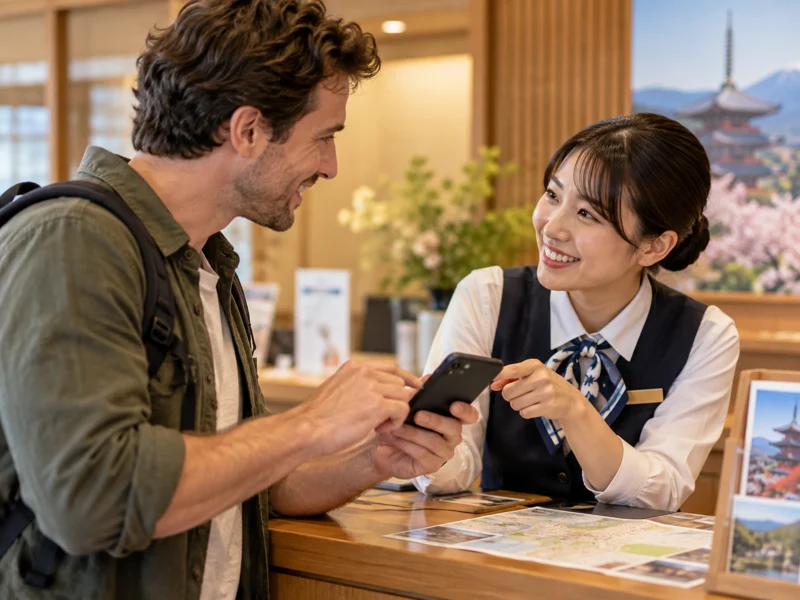
A traveller showing a phone to check an understanding

If you misunderstand a queue or a procedure, pause and check. A brief apology and a correction are often enough. If an explanation is unclear, ask again using short words or pointing.

You do not have to solve everything alone. Ask the shop, station or other relevant service for help with the situation.

Remember this!
  • Pause, check and correct what you can.
  • Do not let one mistake define the visit.
Explore a little further

You have explored enjoyment, perspectives on Japan, useful services and everyday interactions. Now choose a category or guide that fits what you would like to do next.

✿ Summary ✿

Greet, ask clearly and check what you understood. Respect consent and local guidance for photographs and services. If there is a misunderstanding, pause and check again. Use the guides when you need them, and enjoy Japan in your own way.

Considerate interactions with people — an illustrative scene