





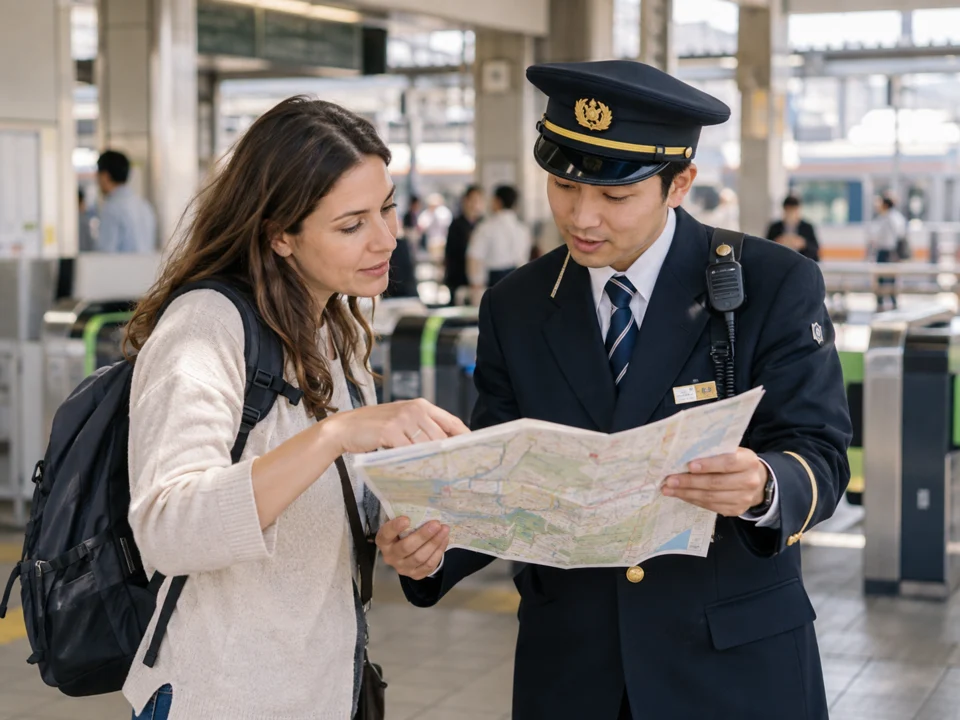
Visitor and station staff checking a map

Find your way with confidence

When you are lost

Pause, check your location,
and ask for help when you need it.

✿ What you will learn ✿

Getting turned around can happen to anyone.
Learn how to check your location,
find the right exit, and ask for directions.

✿ Key points ✿

Visitor and station staff checking a map

✿ Contents ✿

  1. 1. Pause somewhere safe 〉
  2. 2. Check where you are 〉
  3. 3. Ask for directions 〉
  4. 4. Find the right exit 〉
  5. 5. If your phone fails 〉
  6. 6. When you need more help 〉

✿ Frequently asked questions ✿

Q Can I ask without speaking Japanese? +

Yes. Show a map, destination name, or written address. Staff language support varies, but you can try a translation tool or another information desk.

Q Why does the map put me in the wrong place? +

Location signals can be less accurate indoors or underground. Check a nearby landmark and the station’s map before following the pin.

Q Should I call 110 just for directions? +

For ordinary directions, try station staff or a tourist information center first. Call 110 if you need urgent police help; call 119 for fire or an ambulance.

1Pause somewhere safe

Pausing off a busy walkway

Move out of the flow of people before checking your phone. Stay off roadways and away from platform edges. If you are with others, agree on a nearby meeting point.

A station entrance or narrow pavement can get busy. Stepping aside gives you time to think and helps others pass comfortably.

Remember this!
  • Step aside and stop somewhere safe.
  • Look around before walking again or crossing a road.
2Check where you are

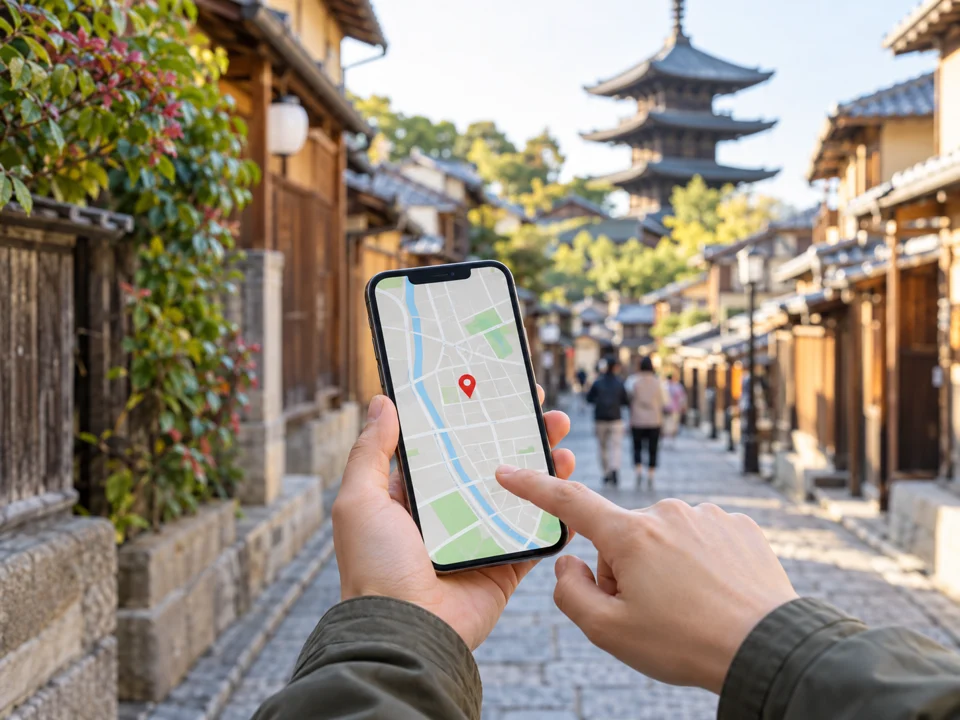
Checking a map and landmark

Compare the map with a station name, nearby building, or street sign. Check the destination’s full name and address, especially if several places have similar names.

It is fine to double-check. Showing both your current location and destination makes it easier for someone to explain the route.

Remember this!
  • Match the map to a landmark you can see.
  • Cross-check location pins indoors or underground with station or building names.

3Ask for directions

Asking station staff for help

Try a station staff member or tourist information center. Say “Sumimasen” and show the destination: “Koko ni ikitai desu” means “I want to go here.” Translation or a written address can help.

You do not have to speak fluently. A short question and a clear destination help people assist; if someone cannot help, try another staff member or information desk.

Remember this!
  • Show your destination using its address or a map.
  • Try another staff member or information desk if help is unavailable.

4Find the right exit

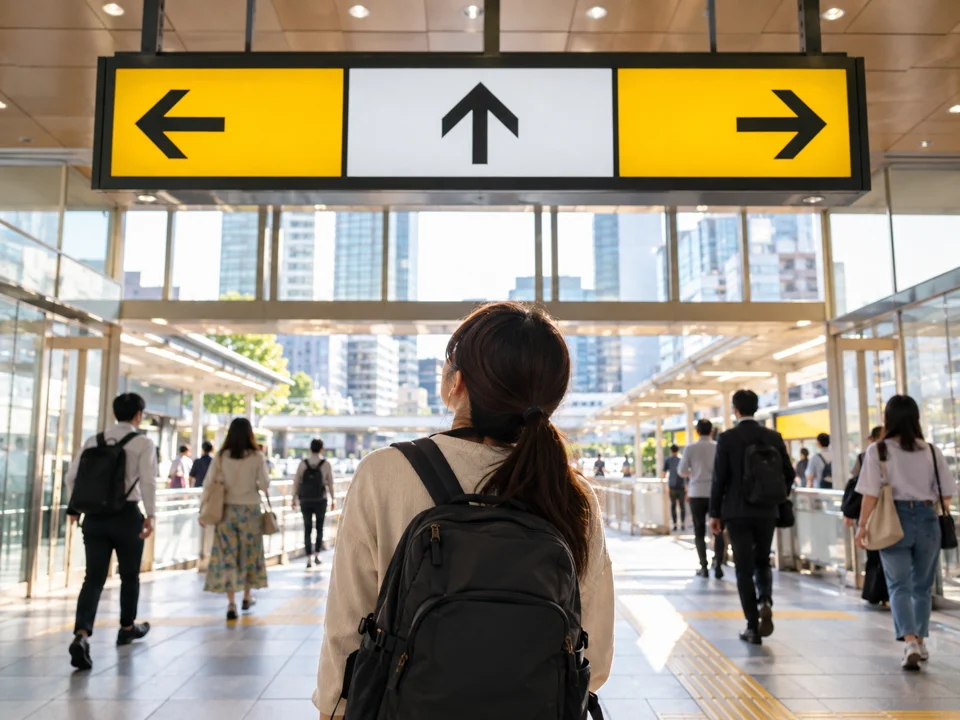
Finding the station exit

At large stations, check the station map and exit name or number before leaving. Line names and station numbers can help identify your route. Ask staff if you are unsure about a ticket gate.

Large stations can confuse local people too. Asking which exit is nearest your destination is often easier than guessing your way through several corridors.

Remember this!
  • Check the exit name or number before leaving the station.
  • Do not enter a paid area just to take a shortcut.

5If your phone fails

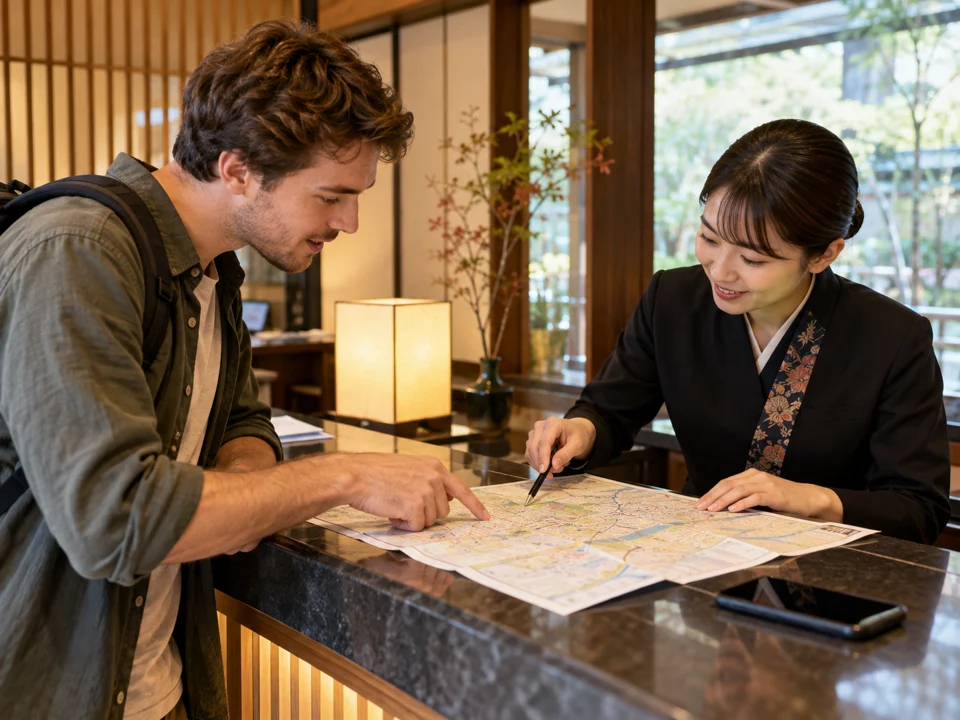
Checking an address at hotel reception

Keep your hotel’s name, address, and phone number on paper or a saved screen. Without a working map, ask at a staffed station or information desk. A taxi may be an option; show the exact address.

A written address can be easier to understand than a spoken name. You can ask for help even when your battery runs out; people do not need you to have an app ready.

Remember this!
  • Keep your hotel address on paper or a saved screen.
  • Check local charging, Wi-Fi and taxi options and payment methods.

6When you need more help

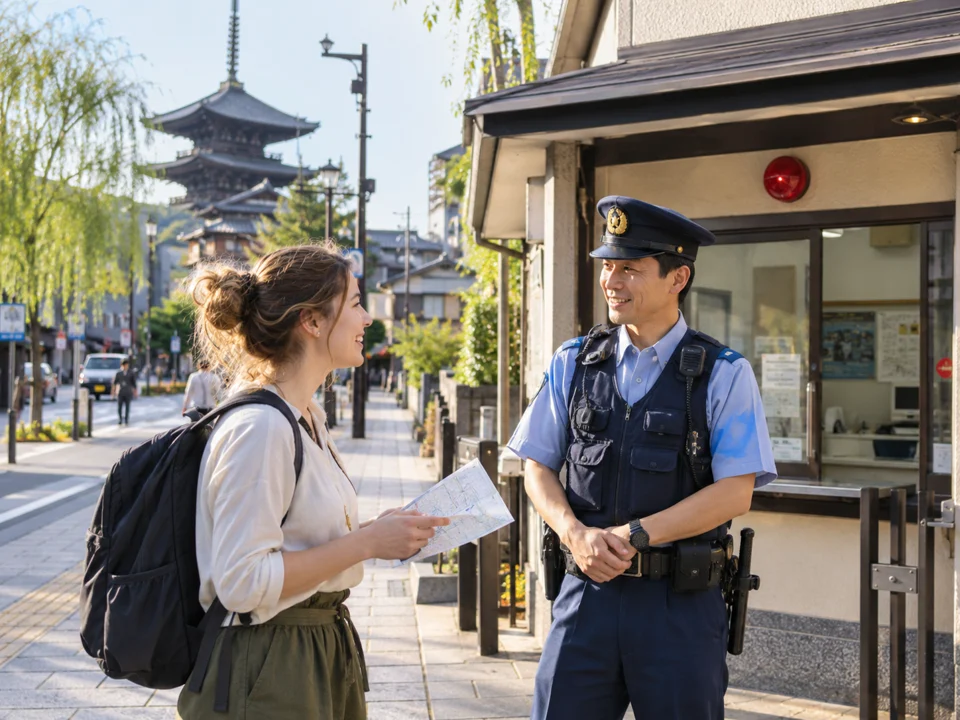
Seeking help in a well-lit place

For travel assistance, JNTO’s Japan Visitor Hotline is 050-3816-2787, available 24 hours in English, Chinese, and Korean. In immediate danger call police on 110; for fire or an ambulance call 119.

Getting lost alone can feel unsettling. Stay in a safe, lit place and give a nearby landmark; emergency numbers are for urgent situations, not ordinary route questions.

Remember this!
  • Explain where you are using a nearby landmark.
  • Ask station staff or a tourist desk first for ordinary directions.

✿ Summary ✿

Stop somewhere safe, confirm your location, and show the destination clearly. Station staff and tourist information centers can help you find the next step. Keep your hotel address available and use emergency services if you are in immediate danger.

Visitor and station staff checking a map