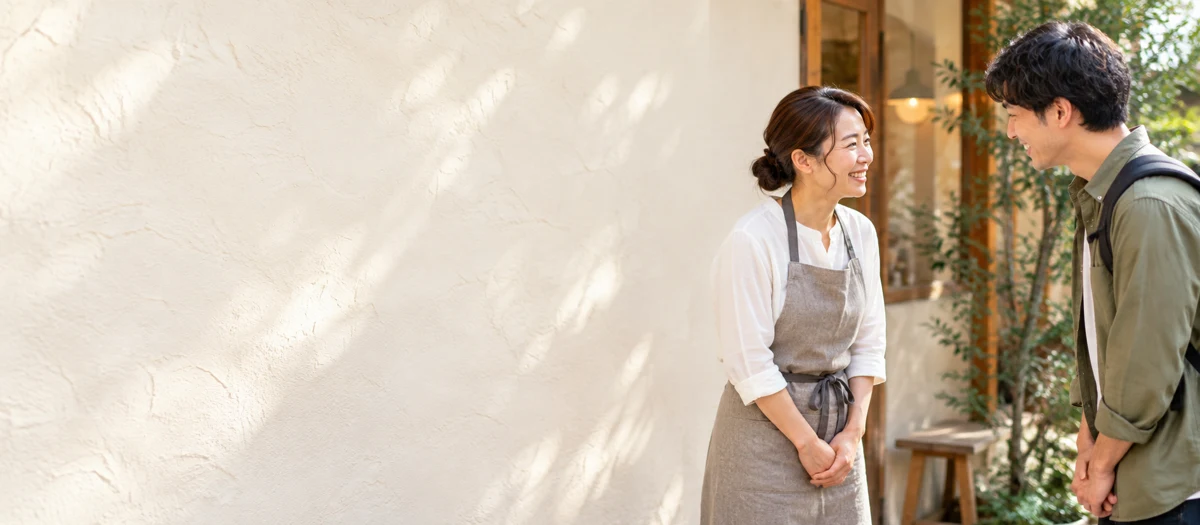






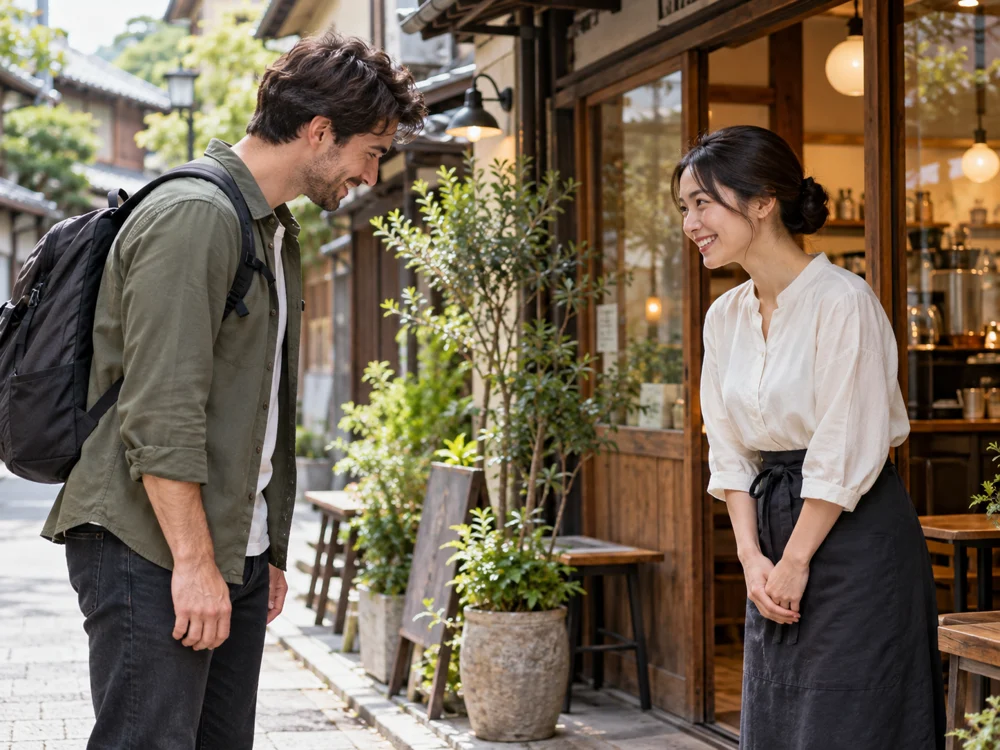
Two adults sharing a friendly greeting in Japan

Connect with a few friendly words

Japanese greetings

You do not need perfect Japanese.
A small greeting can make a visit easier.

✿ What you will learn ✿

Learn six everyday ways to greet people,
say thanks, and ask for help.
Start with a phrase that feels comfortable.

✿ Key points ✿

A friendly everyday greeting

✿ Contents ✿

  1. 1. Greetings for the day 〉
  2. 2. Say thank you 〉
  3. 3. Excuse me & sorry 〉
  4. 4. A small nod or bow 〉
  5. 5. Useful words in shops 〉
  6. 6. Ask again when unsure 〉

✿ Frequently asked questions ✿

Q Do I have to bow every time? +

You do not need to perform a formal bow at every encounter. In everyday situations, a small nod or friendly greeting is a good starting point. Respect comfortable distance and the other person’s lead.

Q Should I answer irasshaimase? +

Staff use irasshaimase to welcome customers. You do not need to repeat it. A small nod is fine; use a short request such as kore o kudasai when ready to choose.

Q What if my Japanese is not clear? +

Try a short phrase, point to the relevant item, or ask the person to repeat slowly. A translation app can help, but language support varies. Thank them for their time and do not feel you must speak perfectly.

1Greetings for the day
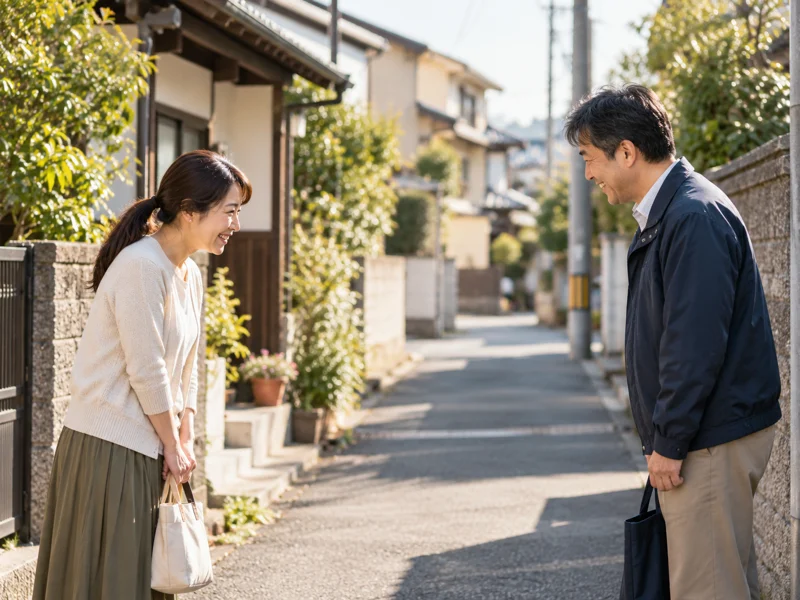
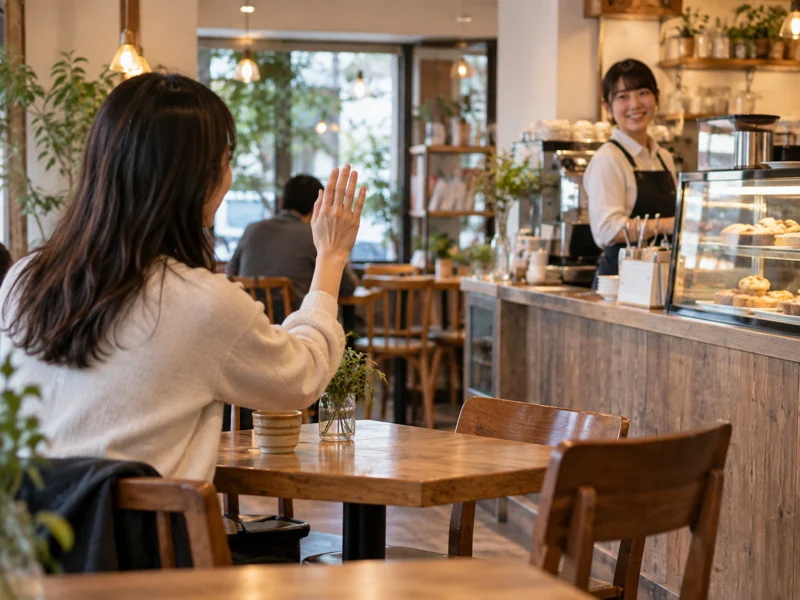
A friendly morning greeting

In the morning, try おはようございます (ohayou gozaimasu) — good morning. During the day, こんにちは (konnichiwa) — hello. In the evening, こんばんは (konbanwa) — good evening.

A greeting can start an interaction, but people do not greet every passer-by on a busy street. With a host, neighbour or someone you approach, a short phrase or nod is a comfortable start; there is no exact clock time when one greeting must change to another.

Remember this!
  • Use a greeting that fits the time and situation.
  • Use polite forms, such as ohayo gozaimasu, with people you do not know well.
2Say thank you

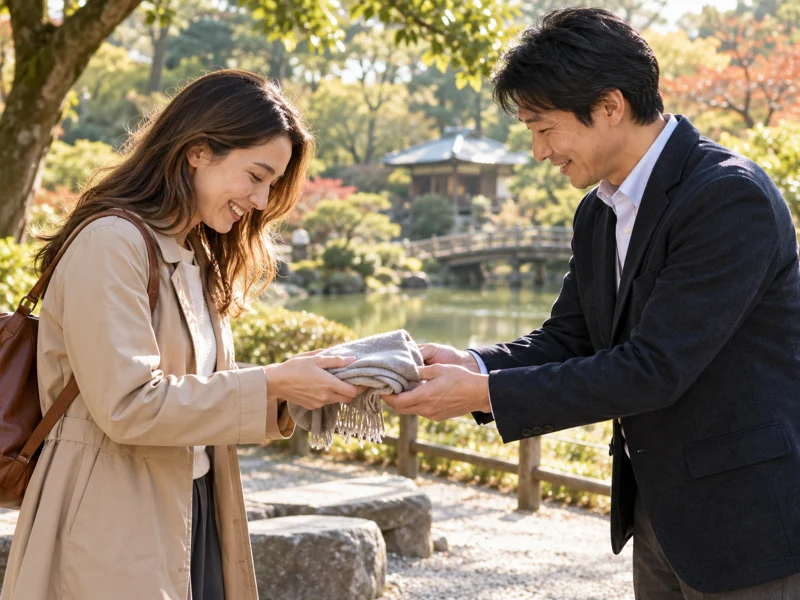
Saying thank you after receiving help

When someone helps you, say ありがとうございます (arigatou gozaimasu) — thank you. The shorter ありがとう (arigatou) is casual and often used with friends or family.

Thanks lets the other person know their help reached you. Imperfect pronunciation is fine; you can also smile or nod without forcing a long conversation.

Remember this!
  • Use a polite thank-you when unsure.
  • Thank people after directions, help or service.

3Excuse me & sorry

Politely getting a staff member’s attention

すみません (sumimasen) can mean excuse me when getting attention, or sorry after a small mistake. Say it first, then briefly explain what you need or what happened.

A short opening helps someone notice that you want to ask a question. Wait for a suitable pause; if they seem busy or cannot help, it is fine to ask another person.

Remember this!
  • Follow sumimasen with a short explanation of what you need.
  • Try sumimasen, eki wa doko desu ka when asking where the station is.

4A small nod or bow

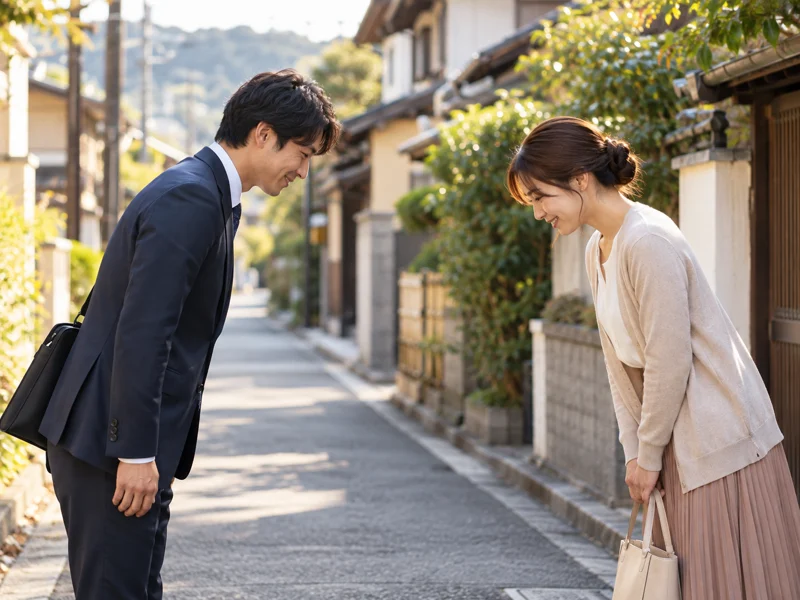
Two adults exchanging a small bow

A light nod or small bow often accompanies a greeting or thanks. In everyday encounters, keep it natural. You do not need to copy formal bowing angles or routines.

Small nods and bows are common, but the form varies with the relationship and situation. A handshake may also be offered. Respond in a way that is comfortable for both people; everyday greetings do not require a formal angle, deep bow or physical contact.

Remember this!
  • Start with a gentle nod or bow.
  • Keep a comfortable distance without forcing a handshake or physical contact.

5Useful words in shops

Pointing to a menu in a shop

これをください (kore o kudasai) — this one, please — is useful when pointing to an item or menu. At the end, ありがとうございます (arigatou gozaimasu) — thank you — is a simple option.

“Irasshaimase” welcomes customers rather than asking a question, so you can browse without answering. Pointing at a menu or item helps when ordering. Stock and language support vary; use a few words or a translation app when needed.

Remember this!
  • Point clearly and use a few words to show what you mean.
  • A nod is enough in response to irasshaimase; no spoken reply is required.

6Ask again when unsure

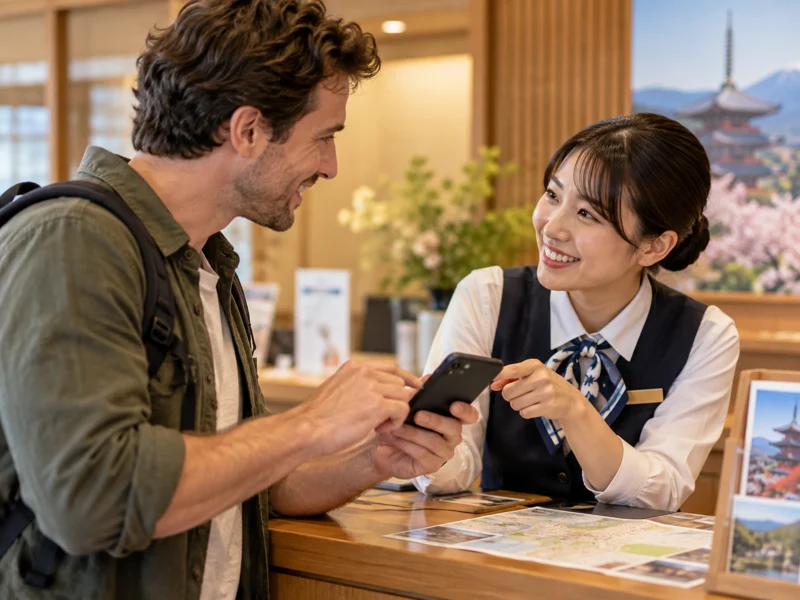
Asking for help with translation

もう一度お願いします (mou ichido onegaishimasu) — please say that again. For a slower explanation, ゆっくりお願いします (yukkuri onegaishimasu) — slowly, please — is a useful short request.

Asking again prevents misunderstandings and helps the other person adjust. English is not available everywhere; use a translation app or show the relevant phrase, while keeping private details off the screen.

Remember this!
  • Say when you have not understood.
  • Ask whether the person speaks English to find a shared language.

✿ Summary ✿

A greeting, a thank-you, or a small nod can help a conversation feel friendly. Use polite phrases with people you do not know well, and say when you need help understanding. There is no need for perfect pronunciation or elaborate bows—start small and respect the other person’s time.

Start with a small greeting