A short question when you are unsure

Out and about in Japan: what should I do?

Practical next steps and Japanese phrases to show someone.
A person standing on a city street checking a phone
See contents

Start here

A small problem can interrupt a day out. These six situations explain what to do first and how to ask someone nearby for help. Facilities and access conditions vary, so check local signs and instructions too.

Each “Japanese phrase for asking for help” is a sentence you can show to the person listed. Use it if speaking Japanese is difficult.

I have a cup or food wrapper. Where is a bin?
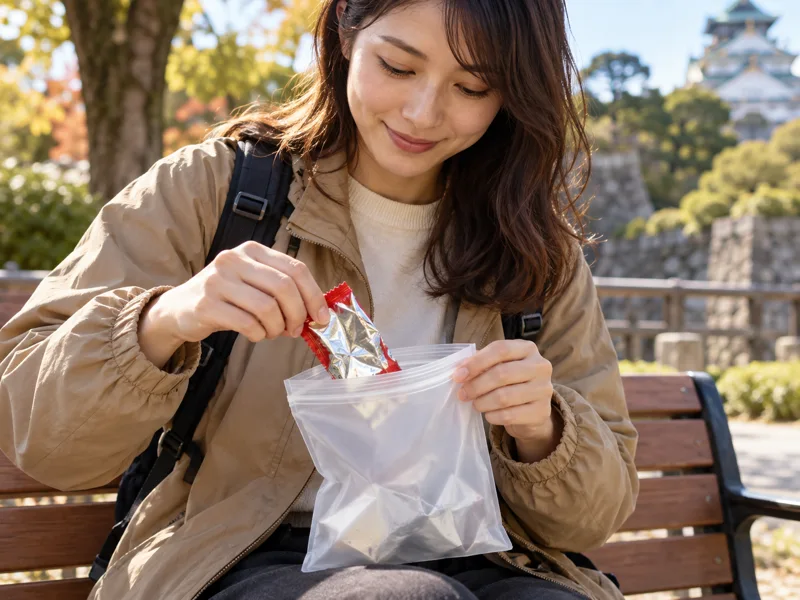
A person putting rubbish in a small bag while out

Keep it in a small bag until you find a bin you are allowed to use. If the shop where you bought it is nearby, ask whether they can take it back. Follow the sorting labels when disposing of it. Not every convenience store has bins, and a shop may not accept rubbish from elsewhere. Drink-container recycling boxes beside vending machines are not for cups, food wrappers or leftover drinks.

Carry rubbish in a small bag until you find a suitable bin.

Japanese phrase for asking for help

Show this Japanese sentence to staff at the shop where you bought the item.

このごみは、どこに捨てられますか?

Where can I dispose of this rubbish?
I need a toilet. Where should I look?

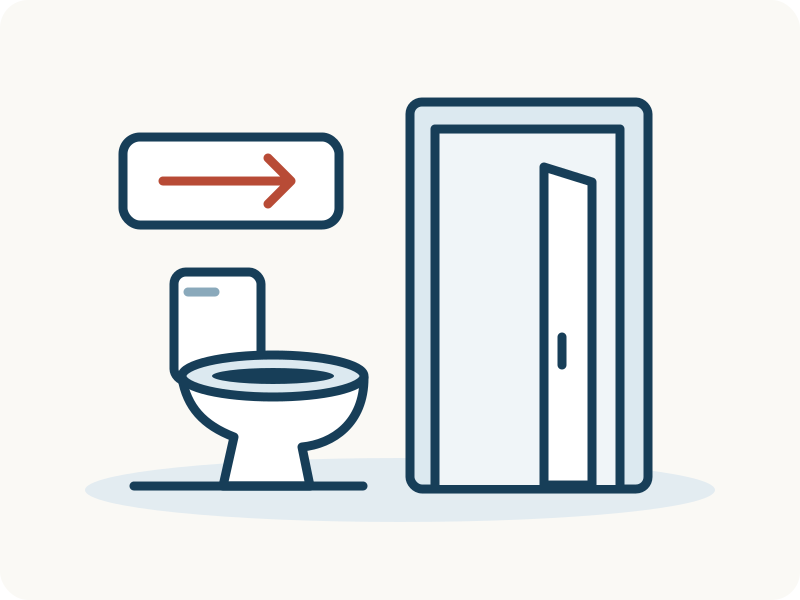
Illustration of a toilet and a sign showing the way

Look for public toilets or toilet signs in parks, stations and shopping facilities. If you want to use a shop’s toilet, ask staff first. Facilities, opening hours and access conditions vary; not every convenience store makes its toilet available. If a station toilet is beyond the ticket gates, ask station staff rather than going through without permission.

Look for signs and ask before using a shop’s toilet.

Japanese phrase for asking for help

Show this Japanese sentence to staff at a nearby shop or facility.

近くにトイレはありますか?

Is there a toilet nearby?

I’m lost. Who can I ask, and how?

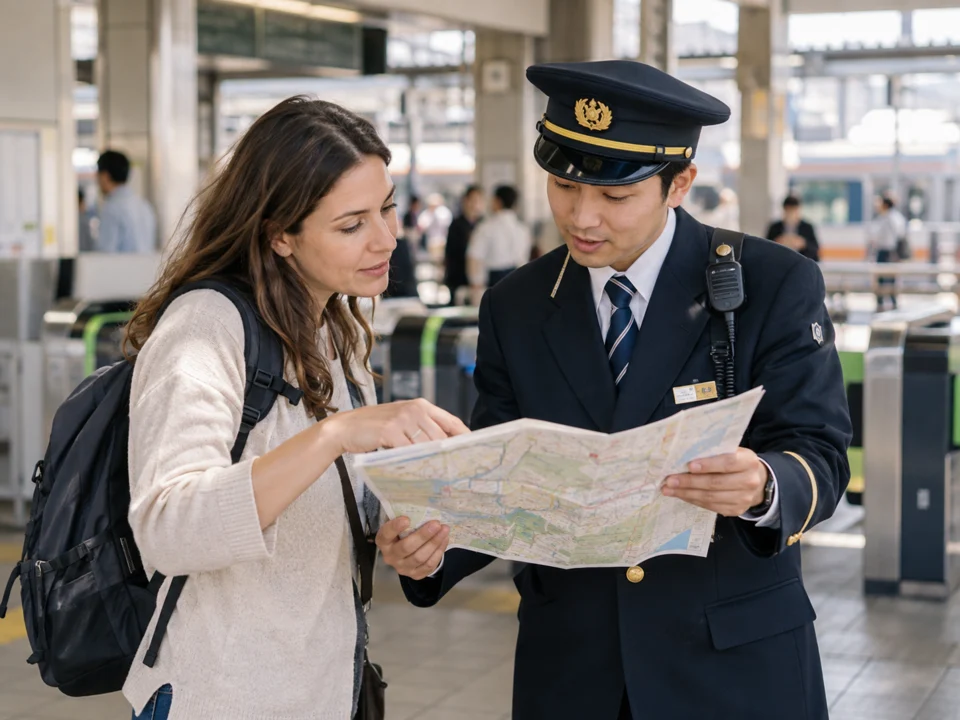
A traveller showing a map to station staff for directions

Stop somewhere clear of other pedestrians. Have your destination’s name and address ready on your screen or written on a note. Show it at a nearby tourist information centre, to station staff or at a police box. An address helps distinguish places with the same name. Near a station, check the exit number too. Information-centre hours and available languages vary; English assistance is not guaranteed everywhere.

Show both the destination’s name and its address.

Japanese phrase for asking for help

Show this sentence and your destination’s name and address to station staff, tourist information staff or an officer at a police box.

ここに行きたいです。道を教えてください。

I’d like to go here. Could you tell me the way?

My phone is nearly out of battery. What now?

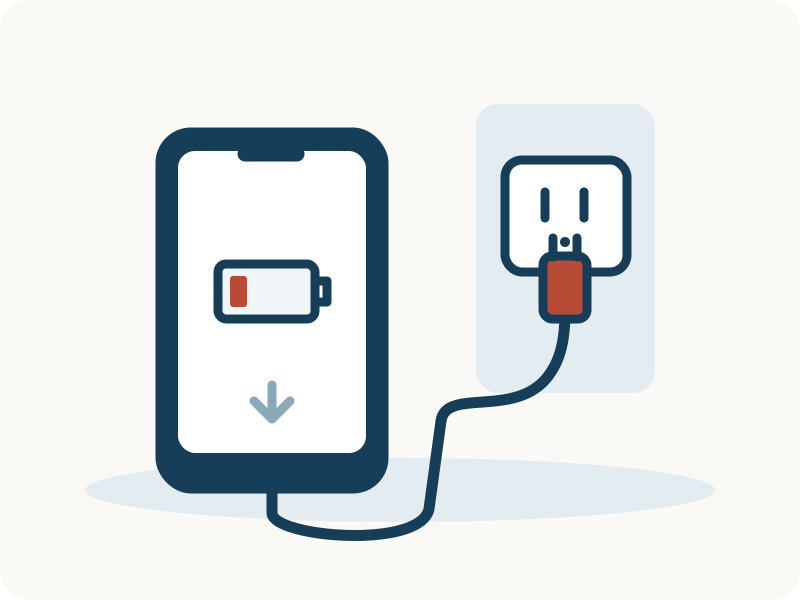
Illustration of a phone, charging cable and power socket

While you still have power, write down your accommodation’s name and address and your route back, then switch to low-power mode. If you look for a seat with charging facilities or a rental power bank, check access conditions, fees, payment and return instructions first. Some services need an app or phone-based payment, so check before the battery dies. If you are unsure whether a socket is for customers, ask staff before using it.

Check your way back and charging options before your battery dies.

Japanese phrase for asking for help

Show this Japanese sentence to staff at the shop or facility.

スマートフォンを充電できる場所はありますか?

Is there somewhere I can charge my phone?

It has started raining. Where can I get an umbrella?

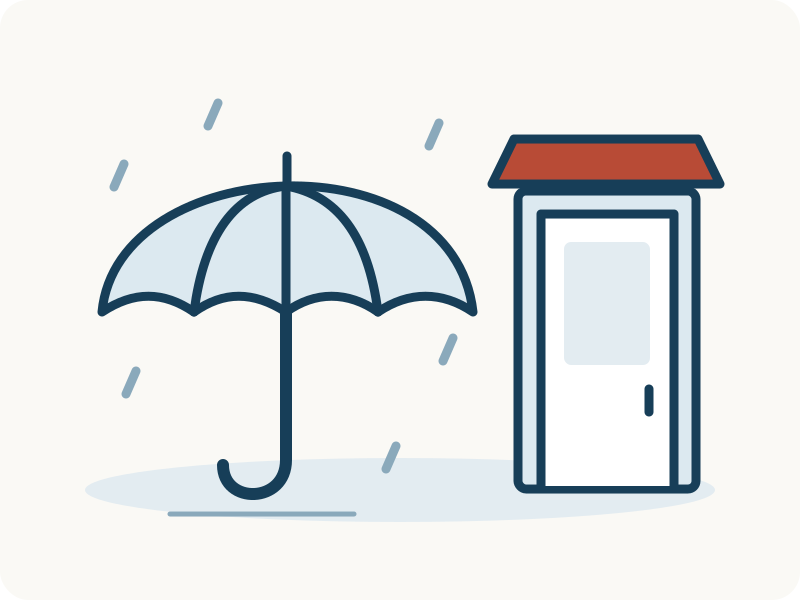
Illustration of an open umbrella and raindrops

First, find shelter without blocking a walkway or entrance. Ask a nearby convenience store or another shop whether they sell umbrellas; stock and selection vary. Close your umbrella before entering a building and follow its instructions about umbrella bags or stands. Do not assume umbrellas left in a stand are free to borrow. If a lending service is clearly marked, check how to return the umbrella.

Check umbrella purchase or loan conditions and the building’s entrance instructions.

Japanese phrase for asking for help

Show this Japanese sentence to staff at a shop where you would like to buy an umbrella.

傘は売っていますか?

Do you sell umbrellas?

I found someone’s lost item. Where should I take it?

Illustration of handing a found wallet to a staff member at a counter

If you find an item inside a station, train, shop or another managed facility, first hand it to that facility’s staff. If you find it on the street, take it to a nearby police box or police station. Explain where and when you found it. If you cannot hand an item found inside a facility to its staff, ask the police. Hand the item over as it is, without searching a wallet or operating a found phone.

Inside a facility, tell its staff; on the street, take the item to the police.

Japanese phrase for asking for help

Show this sentence to staff where you found the item, or to an officer at a police box or station if you found it on the street.

これを拾いました。

I found this.

Ask, then take the next step

Pause somewhere safe, check the signs and ask a short question if you need help. Following the shop or facility’s guidance makes it easier to decide what to do next.

Sources and further information

Service and shop information gives examples, not a promise of the same facilities or policies everywhere.

  1. Japan Tourism Agency: Travel Etiquette Guide (PDF)
  2. Japan Soft Drink Association: Recycling Boxes Beside Vending Machines (Japanese)
  3. Japan National Tourism Organization: A Guide to Japanese Toilets
  4. Japan National Tourism Organization: Find Tourist Information Centres
  5. Tokyo Metropolitan Police Department: Police Box Activities (Japanese)
  6. CHARGESPOT: How to Use the Service (Japanese)
  7. GO TOKYO: Rainy-day Activities in Tokyo
  8. FamilyMart: Household Products (Japanese)
  9. Tokyo Metropolitan Police Department: Lost Property FAQ (Japanese)

Sources checked: October 12, 2026