
JAPAN · CULTURE & NIGHTLIFE
A practical guide to safer nights out
Cover charges, starters, extensions, street touts and the last train: useful checks from planning your evening to paying the bill.
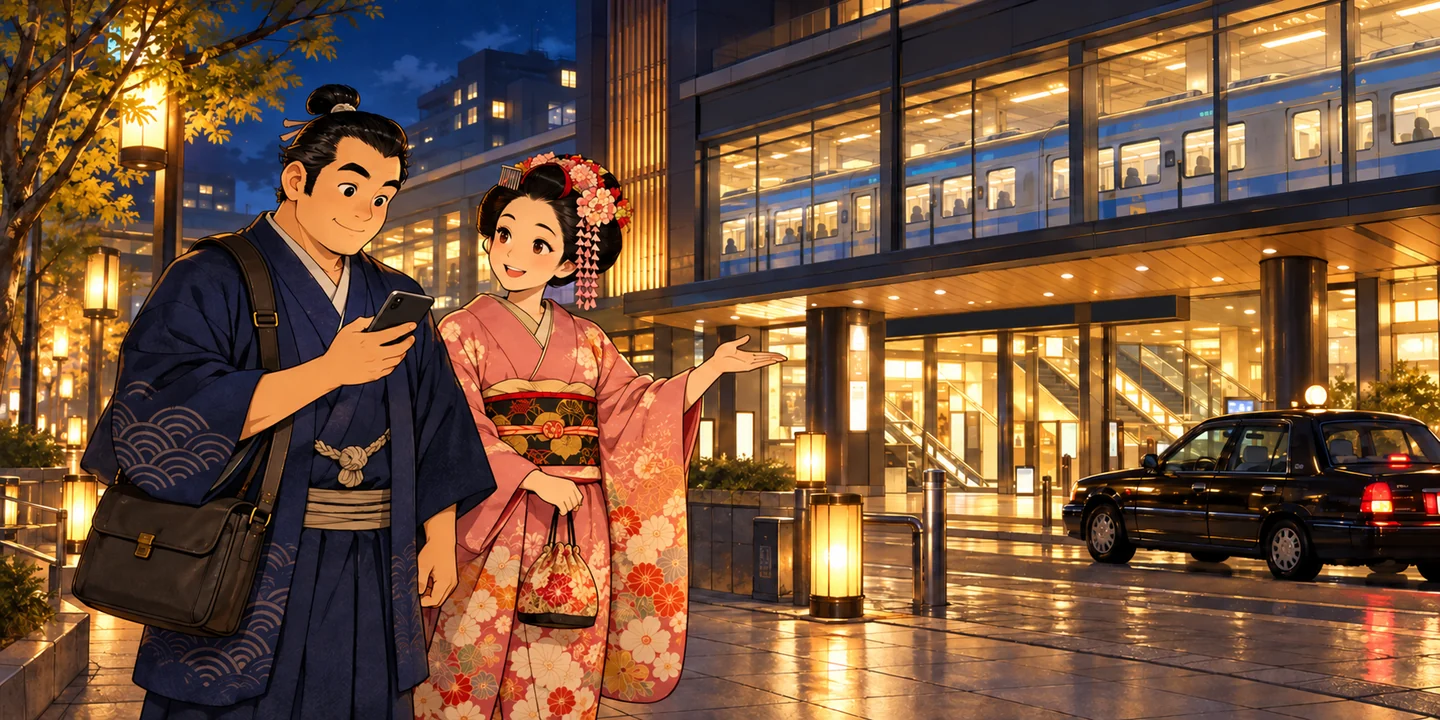
Before leaving: plan your return and budget
- Last connection Check date and direction
- Getting to the station Allow time to walk
- Leave the venue Set a time with a margin
This is the planning order. Save your address and an alternative way home too.
Check the last service for your actual route and date, including connections. Decide when to leave the venue, rather than simply aiming for “the last train.” If using a taxi, check the likely journey and cost, and save your accommodation address so you can show it easily.
Before entering: understand the full price
- Base charges Seat, starter, set charge
- Orders & time Drinks and extra time
- Tax & service Included or extra?
Charges vary by venue. If they remain unclear, choose another place before entering.
A cover or seating charge is a fee for admission or a seat; otoshi is a small starter that may carry a charge. A set price may cover a defined period and particular items. Ask what each charge includes and whether tax and service are included. If the price remains unclear, you can choose another venue before entering.
Do not follow street touts
- Decline briefly Make no commitment
- Move away Do not follow them
- Seek help if pressured Go to a staffed place
Choose a venue independently and verify its official details and address.
Tokyo police warn about excessive bills and other crimes at establishments recommended by street touts. Do not follow someone promising a cheap or immediate deal. Choose a venue independently and check its official information and address. Base caution on the behaviour, not a person’s nationality or appearance.
Inside: keep track of drinks and belongings
- Your drink Keep it in view
- Your belongings Keep wallet and phone close
- Feeling unwell Seek trusted help
Do not drink something you are unsure about, and do not push yourself.
Keep your drink in view; do not drink it if you are unsure what happened to it. Do not leave a wallet or phone unattended, and confirm the cost of extra orders. If you feel unwell, stop and seek help from a trusted companion or staff member.
At payment: check the itemised bill
- Read the bill Compare orders and prices
- Ask for details If the total differs
- Prioritise safety Do not prolong an argument
Call police on 110 for immediate danger. Keep records only when safe.
If a bill differs from what you expected, ask for a breakdown and compare it with your orders and the price list. If you feel threatened, prioritise your safety over continuing an argument. Keep a receipt, venue name and time when safe to do so; contact your card issuer if you suspect unauthorised card use.
Going home: stop somewhere safe to check
- A well-lit place Stop near other people
- Check the route Your location and destination
- Available transport Check it is still running
For an ambulance, call 119 and give your location or a nearby landmark.
Stop in a well-lit, populated place to check directions rather than walking while focused on your phone. If you miss the train, confirm available transport or an open accommodation option instead of assuming a venue stays open all night. For an ambulance in a medical emergency, call 119 and give your location or a nearby landmark.
What if…?
What if I realize I cannot quickly show my hotel address before going out?
Save the exact address where you can show it easily. Check your phone battery and return route, and decide when to leave the venue.
What if the bill includes charges I did not expect?
Ask for an itemised breakdown and compare it with your orders and the price list. Keep the receipt, venue name and time when safe. If you feel threatened, prioritise your safety over continuing an argument.
What if I become separated from friends while checking the way home?
Stop in a well-lit, populated place and use the reconnection plan you agreed on. Check directions and messages while stopped rather than walking with your attention on the phone.
Frequently asked questions
Should I sit down before understanding the charges?
Entry or seating itself may incur a charge. Ask at the entrance and use the venue only once you understand its prices and ordering conditions.
Is the last train always at the same time?
It depends on the line, direction, day and service conditions. Check the current route for your date, including onward connections, with the railway operator or a current journey planner.
Official sources and further reading
Checked 4 October 2026. Venue-selection checks, sample questions and privacy advice include editorial suggestions. Prices, opening information and event conditions change; check the relevant operator’s current guidance before visiting.